You wrote the proposal, revised the service page, and read the sales email again, but it still doesn’t land. If you’ve been wondering why my writing isn’t working, you aren’t alone. The words may be clean enough, but the document isn’t doing its job. In this post, you’ll learn how to diagnose whether your writing is failing due to a structural problem or because you’re too close to the work, so you can stop editing in circles and fix the real issue.
When you start asking this question, the answer is usually one of two things. Either the piece has a structural problem, which means it fails on the page, or you’re too close to it to judge it well. Once you know which one you have, you can stop revising in circles and choose the right kind of help.
Key Takeaways
- If your writing isn’t working, the problem is usually one of two things, weak structure or you’re too close to the draft.
- A structural problem means readers can’t quickly tell what the piece is about, why it matters, what to do next, or why they should trust it.
- A distance problem means the draft may be workable, but you’ve revised it so much that you can’t judge it clearly anymore.
- The fastest diagnosis uses two checks, a reader-outcome test for page-level problems and a distance test for editor fatigue or overfamiliarity.
- The right fix depends on the cause, restructure the piece if the message and order are weak, or get an outside read if you’re stuck revising without improving clarity.
Estimated reading time: 12 minutes
When the Document Is the Problem
Some drafts miss because the writing itself is unclear, out of order, too vague, or aimed at the wrong need. That isn’t a confidence issue. It’s a function issue.
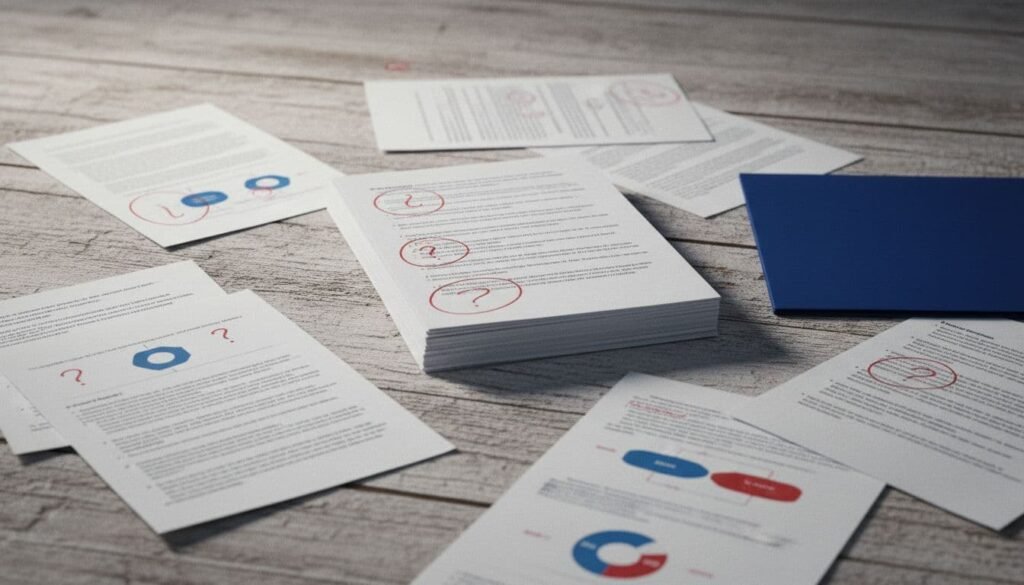
If a reader can’t tell what you’re offering, why it matters, or what to do next, the document is underbuilt. You can polish every sentence and still have a weak piece because the problem sits deeper than wording.
Look for signs the reader cannot follow the logic, even if every sentence sounds fine
This happens all the time in business writing. A proposal opens with background instead of the offer. A report drops key context halfway through. A service page spends three paragraphs warming up before it says who it helps. An email asks for action only after the reader’s attention is gone.
Each sentence may sound fine alone. Still, the reader experiences the document in order, not in fragments. If the main point is buried, the logic breaks. If proof arrives after the claim has already strained trust, the reader hesitates. If the call to action doesn’t grow out of what came before, it feels abrupt or weak.
That’s why line edits can’t rescue bad order. A clean sentence in the wrong place is still in the wrong place.
Ask whether the document matches the job you need it to do
A draft can be well written and still miss its target. That’s common when you’re solving the wrong communication problem.
A proposal should reduce doubt and make the decision easier. A service page should build trust and show fit. A sales email should move the reader toward one clear next step. If your document does something else, it will feel off even when the prose is polished.
Think of it like a key cut for the wrong lock. The metal may be smooth. The shape still won’t open the door.
So when a piece isn’t working, ask what job it has. Then check whether the draft is built for that job. If not, the fix starts with purpose, not sentence polish.
When You’re the Problem
Sometimes the draft is not a mess. The problem is that you’ve been inside it too long.
After enough passes, your brain stops reading the page and starts reading your intent. You know what you meant, so you stop noticing what never made it into the draft. That kind of closeness creates its own blind spot. The the mental equivalent of “nose-blind.”
If the draft is confusing to a fresh reader, that’s a page problem. If you can’t tell what’s confusing anymore, that’s a distance problem.
Familiarity can hide gaps, repetition, and unclear wording
When you know the backstory, you fill in missing steps without noticing. You read a vague phrase and hear the fuller meaning in your head. You repeat a point in two places and miss the overlap because each version arrived during a different revision pass.
That’s why a draft can feel wrong without giving you a clear reason. You sense drag, but you can’t point to the exact line. Meanwhile, the page may contain skipped context, soft claims, or repeated setup that a new reader would catch right away.
This is also why self-editing gets harder as it continues. Your eyes grow kind. Your brain smooths the bumps.
If you want a fast self-check for sentence friction, this read aloud editing technique can help you hear what your eyes now skip.
The key clue is that you keep changing words, but the draft doesn’t get clearer
Productive revision improves communication. Endless tinkering only changes the surface.
You swap verbs, trim adjectives, rewrite one sentence six times, and the document still feels muddy. That pattern matters. It often means you’re no longer evaluating the draft. You’re reacting to your discomfort with it.
A useful pass leaves the piece easier to follow. A stuck pass leaves tracks but not progress. The wording changes; the reader experience doesn’t.
When that keeps happening, you may not need more private effort. You may need distance, or an outside read, so you can tell what should stay, what should move, and what never belonged there in the first place.
How to Tell the Difference
You don’t need a long checklist. You need a quick diagnosis.
Here’s the simplest way I know to separate a bad draft from a tired eye.
| Test | What you check | If it fails | Likely issue |
|---|---|---|---|
| Reader-outcome test | Can a reader say what this is, why it matters, what to do next, and why to trust it? | Answers are weak, missing, or scattered | Structural |
| Distance test | Can you summarize the draft and judge what’s essential without rewriting as you go? | You can’t assess it cleanly anymore | Internal |
The takeaway is straightforward. One test checks the page. The other checks your distance from the page.
Use a reader-outcome test to spot a structural problem fast
Read the draft as if you know nothing about it. Then answer four plain questions.
What is this about? Why does it matter? What should I do next? Why should I trust this?
If those answers are scattered across the document, delayed too long, or absent, the structure is weak. That’s true even when the grammar is fine. A service page that never states the offer clearly is weak. A report that gives data before framing the decision is weak. A proposal that asks for yes before it handles doubt is weak.
This test works because readers don’t grade your intentions. They respond to what the page lets them understand in real time.
Use a distance test to spot when you are too close to the draft
Set the draft aside briefly, then come back and read only the headings. If the argument disappears, the structure may be thin, but if you instantly start rewriting instead of evaluating, that’s a distance clue, too.
Next, try to summarize the document in one sentence. If you produce three versions and keep revising them, you may no longer see the piece clearly enough to judge it. The same goes for cutting. If everything feels essential because you remember why each part got added, you’re too close.
That’s when outside perspective earns its keep. Not because you can’t write, but because you can’t stand far enough back to see what the reader sees.
What to Do Once You Know
Diagnosis should guide action. If the problem is structural, keep your attention on message, order, and purpose. If the problem is internal, stop trying to squeeze clarity out of the same tired read.
This is also the point where many small business owners and independent professionals face the real decision. Do you keep revising alone, or do you bring in another set of eyes? If you’d like to explore what that support looks like, you can find the full range of editing services for small businesses and independent professionals here.
If the problem is structural, fix the job, order, and logic before you polish sentences
Step back from line edits. First, rebuild the draft around what it needs to do.
Put the main point earlier. Cut background that delays the message. Group related ideas together. Add the missing proof where doubt naturally rises. Make the next step clear and close to the reason for taking it.
For business documents, that often means writing to the reader’s decision path, not your writing process. What do they need first? What removes doubt next? What proves you’ve thought this through? What action should feel easy by the end?
If you need help sorting out purpose, audience, and priorities before editing begins, this clarity checklist for editing projects gives you a practical place to start.
If the problem is internal, stop revising in circles and get an outside read
An outside editorial perspective doesn’t have to be dramatic. It simply gives you a fair read of the draft you can no longer assess well.
A good outside read shows what is clear, what is missing, what feels out of order, and what should stay. It tells you whether the problem is deeper structure or only a few trouble spots. It also saves time, because you stop spending hours rearranging furniture in a room that needs a new floor plan, or second-guessing a room that was already workable.
If your document matters, as client-facing material often does, outside judgment is often the fastest path back to clarity. That’s what the Strategic Editorial Diagnostic is for. One focused read, a written assessment, and a clear next step. You get a cleaner decision: revise it yourself with direction, or hand it off for stronger support.
When you ask why my writing isn’t working, you’re usually not dealing with a mystery. The draft is either not built well enough yet, or you’re too close to it to see clearly.
That’s good news, because both problems have a fix. Once you name the right one, the fog lifts. You stop blaming yourself, stop polishing the wrong layer, and move toward a document that can finally do its job.
Frequently Asked Questions About Why Your Writing Isn’t Working
Ask whether a new reader can quickly identify what the piece is about, why it matters, what to do next, and why they should trust it. If any of those answers are missing, delayed, or scattered, the structure is weak. Clean sentences won’t fix it.
Bad writing fails on the page regardless of who reads it. Being too close means the draft may be workable, but you’ve revised it so many times you can no longer assess it clearly. The signal is that you keep changing words without improving how the piece reads.
When each revision pass changes the surface but not the reader’s experience. If the piece still feels muddy after multiple rounds and you can no longer tell what’s essential, an outside read will move you faster than another private pass.
If the problem is structural, yes, start by moving the main point earlier, cutting delayed setup, and grouping related ideas. If the problem is distance, a brief break helps, but an outside editorial read is usually faster and more reliable than waiting for fresh eyes you may not get.
The diagnosis is yours to make. This post gives you two tests to do that. If the structure test passes but the distance test fails, you may only need a focused outside read, not a full edit. If structure is the problem, editorial support gives you direction before you spend more time revising.
Name the Problem, Then Fix the Right Thing
Most writing problems aren’t mysterious. The draft is either not built well enough yet, or you’ve been inside it too long to see it clearly. Both of those have a fix. But they’re different fixes, and applying the wrong one costs time. Restructuring a draft you’re simply too close to doesn’t help. Rereading a draft that has a real logic problem doesn’t either. Once you can name which one you have, the fog clears fast. You stop blaming yourself for the wrong thing, stop polishing the wrong layer, and start making decisions that actually move the work forward.
If You’ve Revised It Twice and Still Can’t See It Clearly
That’s the signal. Not that you’re a bad writer. That you need a read you can no longer give yourself.
Start with the Strategic Diagnostic
Pricing is by document length, starting at $175, with no future commitment required. You’ll get a written assessment of what’s working, what isn’t, and what the document needs next. One focused read, one clear direction.
👉 Strategic Editorial Diagnostic
Want a Second Brain For Your Business Writing?
If you’re carrying the writing load yourself, proposals, client documents, service pages, it’s easy to lose perspective. Strategic editing gives you a partner in clarity, so your message lands and your time is better spent.
Premium Access is how we make that partnership easy. It’s a one-time setup that gives you on-call editing for the work that matters most without re-scoping each project.
Only a few Premium Access clients are active at any given time. If you’re thinking about it, now is a good time to reach out.

Thanks for reading — here’s to clearer writing and stronger ideas.
~~ Susan