There’s a category of editorial help that most independent professionals have never encountered. It’s usually out of reach for small businesses. It’s the the kind of business editing services that big organizations have in-house.
The editorial world has two well-established lanes. There’s the lane for book authors: developmental editors, acquisitions editors, literary agents who mark up manuscripts. And there’s the lane for organizations: corporate communications teams, in-house editors, agencies that handle content at scale. Government agencies operate at that same scale. Both lanes exist. Both serve real needs.
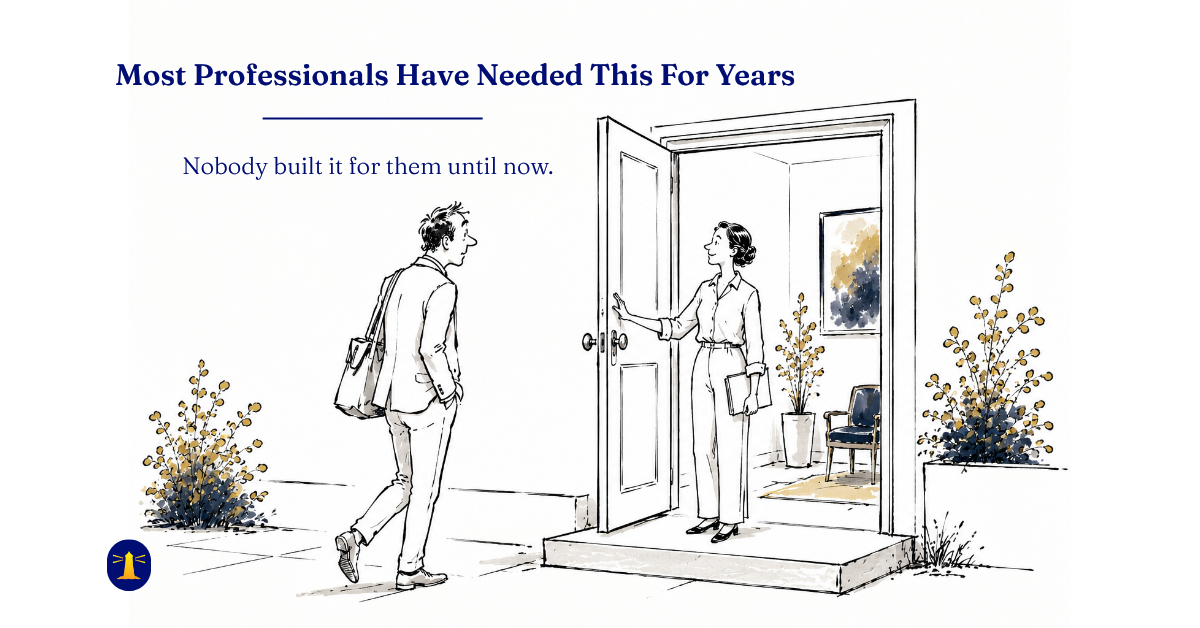
this kind of help for years.
Nobody built it for them.
Until now.
The independent professional, the consultant, the solopreneur, the small business owner who writes their own white papers, proposals, strategic documents, service descriptions, client reports, and capability statements, has been left out of both lanes. Not intentionally; the infrastructure just wasn’t built for them.
The Two Lanes Nobody Built for You
Ask most independent professionals what editing is, and they’ll describe one of two things. Either they picture the red-pen pass, the line-by-line correction of grammar and word choice that makes a document cleaner. Or they picture something more dramatic: a developmental editor working with an author over months, restructuring a manuscript from the inside out to make a published book.
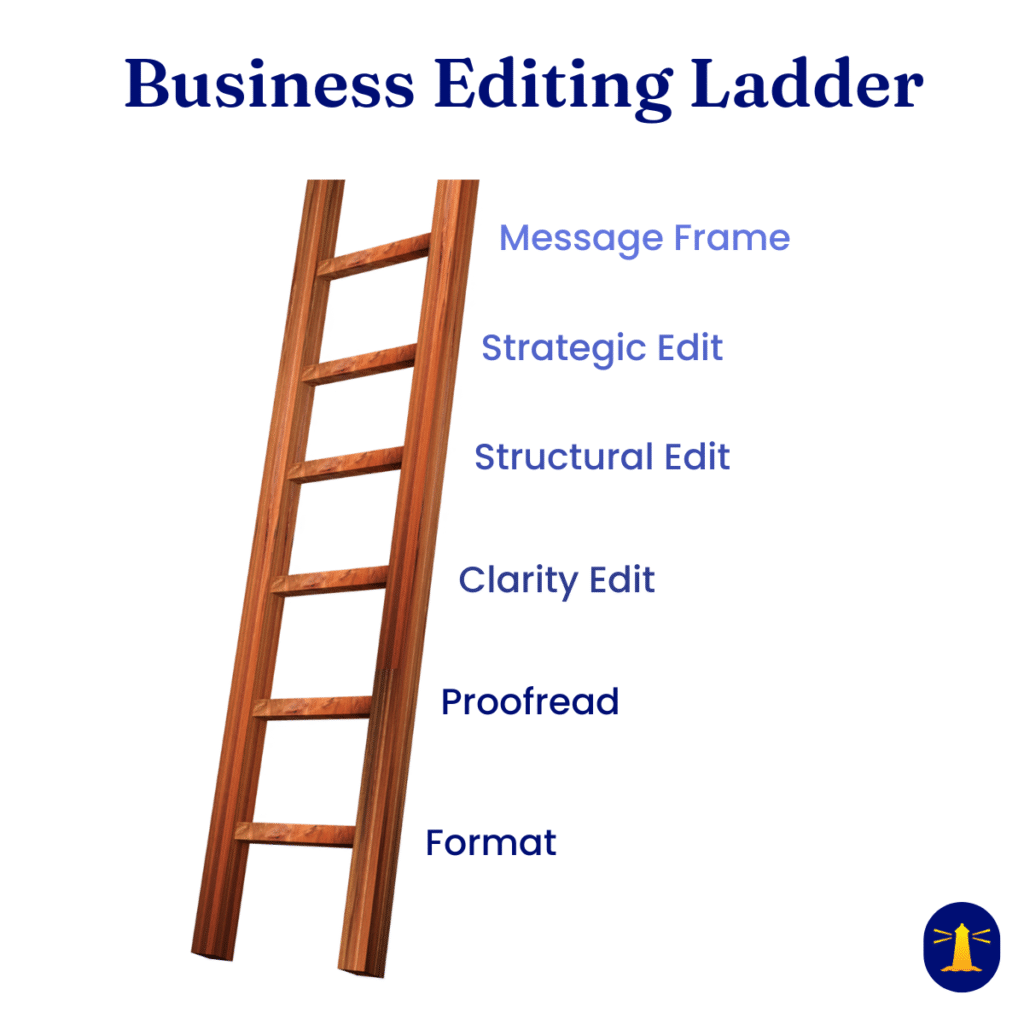
There’s a whole ladder of editing levels for fiction publishing, a clear system the rest of us have accepted (developmental editing, line editing, copyediting, proofreading). But I’ve redrawn that ladder for business writing. If you’ve ever looked at that business writing ladder and wondered where you fit, look at my analysis in “Proofreading Isn’t the Problem. Clarity Is.” Business editing is its own world, separate from the book publishing industry.
Neither the red-pen pass nor the months-long collaboration describes what most independent professionals actually need when something isn’t working in their writing.
What they need, most of the time, isn’t a sentence-level fix or a structural overhaul. What they need is someone who can read what they wrote and tell them what kind of problem they actually have. Is this a structure problem? A clarity problem? A framing problem? A problem with what’s missing rather than what’s there? Those are different problems. They have different solutions. Knowing which one you’re dealing with changes everything about what you do next.
That diagnostic moment, the one before the editing begins, is where most independent professionals are completely alone.
The Moment Before the Editing Begins
In thirty years of editing, the most common thing I hear after a first read isn’t “fix my sentences.” It’s “I’m not sure what’s wrong, but something is.”
That’s not a writing problem. That’s a judgment problem. And it’s a problem that doesn’t have a named solution in the editorial marketplace, at least not one that’s priced and structured for the independent professional who needs it.
The document is written. The deadline is real. The stakes matter: a proposal, a report, a presentation that represents your thinking to people whose opinion of you is directly shaped by the quality of your writing. You know the content is solid. You’ve lived inside this project for weeks. But you can’t quite see it clearly anymore, and you don’t have anyone to hand it to who can.
Clean copy can still fail. Not because the sentences are wrong, but because the meaning drifts, the recommendation is buried, the terms shift halfway through, or the logic skips a step the reader needed. A skeptical reader spots the gap, and now your document becomes a debate. You end up defending your competence instead of your proposal. Proofreading won’t catch any of that, and neither will a line edit. What catches it is a read from someone trained to ask, at every turn, what will a reasonable reader think this means? (I go deep on those hidden risks in “High-Stakes Editing.“)
That moment is the gap. The editorial world doesn’t have a product for it at the independent professional’s scale. You can hire a proofreader to catch typos. You can hire a developmental editor to rebuild a book. But what you need is a different thing, a nonfiction specialist who can tell you what the actual problem is with your short document, not a 100,000 word book. And you need that before you decide what kind of help you need. That service has been missing.
What Pre-editing Judgment Looks Like
Let me name the category plainly, because it doesn’t have a common name yet.
Pre-editing judgment: an assessment of the document’s strategy and argument. This is a business editing service specifically for professional writing. The editorial read that happens before any editing begins. Not ghostwriting or sentence polish or a line-edit pass that makes your sentences cleaner while leaving the structure and argument intact. It’s also not marketing editing, which is about persuasion, or technical writing, which is about documentation. You are buying judgment work: reading for whether your argument holds, your meaning lands, and your reader can act on what you wrote. Pre-editing judgment is a read by someone with the analytic training to tell you what kind of document you actually have, what’s working, what isn’t, and why, so you can make an informed decision about what you need next.
The first question I ask about any document isn’t “what kind of document is this?” It’s “what must this document do?” Function first. Then structure. Then argument, then language. That order is what separates a judgment read from a polish pass. (If you want to see how that plays out in practice, “Strategic Editing for Clear Business Communication” walks through the full approach.)
My editorial craft is not casual, and not accidental. It’s the product of analytic training at the highest levels of the intelligence community, layered on top of doctoral-level training in organizational communication. I spent years synthesizing complex material for four-star generals and senior government officials. I learned to write and edit documents for the way a high-stakes executive audience reads them: for argument, for structure, for what’s missing, for what’s buried, for what’s working against itself. (“What My Years in Government Taught Me About Writing” goes into more detail on where those habits came from.) That’s the same read I bring to every document I evaluate.
This isn’t editing as correction. It’s editing as thinking-with. An editor-partner who arrives not just to mark sentences, but to sit in the architecture of your document, to think through the ideas with you, and to leave behind not just suggestions but understanding. Rigorous and kind. Priced for independent professionals, not enterprises.
That’s the category that hasn’t existed at this scale before. That’s what the Strategic Editorial Diagnostic is.
for argument, for structure, for what’s missing, for what’s buried, and for what’s working against itself.
Why You Haven’t Heard of This
Two reasons, and both of them are structural rather than personal.
The first is that the traditional editorial world built its infrastructure for authors and publishers. The editorial assessment, the manuscript evaluation, the developmental read, these services exist, but they’re designed for book-length work and book-world timelines. They don’t map cleanly onto a white paper that’s due Thursday or a proposal that needs to be right before it goes to the board.
The second is the onboarding problem. Most professionals who need editorial help in a time-sensitive moment run into a wall before the help even begins. Contracts. Scoping conversations. Intake forms. Rate negotiation. The logistics of starting a working relationship from scratch take time that the deadline doesn’t allow. So people give up, or they send the document without outside judgment, or they call a favor they weren’t sure they could ask.
The Strategic Editorial Diagnostic was designed with both of those problems in mind. It’s scoped for the kinds of documents independent professionals actually produce, and it’s structured to start without the friction that usually makes asking for help feel harder than the deadline.
The Strategic Editorial Diagnostic
The Strategic Editorial Diagnostic is a pre-editing judgment read for nonfiction professionals: independent consultants, small business owners, solopreneurs, and government-adjacent organizations whose people write their own high-stakes documents. I read your document, assess what kind of problem you’re actually working with, and give you a written summary of what I found: what’s working, what isn’t, and what the most useful next step would be. It’s not a full edit. Rather, it’s the read that tells you whether you need one, what kind, and where to focus.
This service is priced by document length, starting at $175. It’s fast-turn and scoped for independent professionals and small business owners of all kinds, including those doing government-adjacent work. It’s the first service of its kind priced for people who write their own high-stakes nonfiction and need a thinking partner, not a production line.
If that sounds like the thing you didn’t know existed, it is. And it’s available now.
Still Have Questions About Whether This Service is the Right Fit?
I’ve answered the most common ones below. And if you’re still working through whether you need this kind of help at all, these three posts might help you get there:
- You’re Not the Problem. Your Perspective Is.
- Someone You Respect Said Your Writing Needs Work. Now What?
- Do I Need an Editor? What Writing for Four-Star Generals Taught Me
Keep the Key Points Close
If this post resonated, you might want to download:
Where Did Your Reader Get Lost? A Two-Part Writing Diagnostic
This guide helps you identify where your writing stops working for your reader, before it goes out. If you’ve revised the same document more than twice and still can’t say why it isn’t landing, the next step isn’t another round of editing.
👉 Where Did Your Reader Get Lost? (in the Freebie Library)
Curious About Working Together?
If someone you respect has already told you your writing needs work, that’s enough of a starting point.
Start with the Strategic Editorial Diagnostic
Pricing is by document length, starting at $175, with no future commitment required. You’ll get one focused conversation about your document, your reader, and what’s standing between them.
👉 Strategic Editorial Diagnostic

Thanks for reading — here’s to clearer writing and stronger ideas.
~~ Susan
Frequently Asked Questions About This Business Editing Service
No, and the distinction matters. Marketing editing is concerned with persuasion: does this move the reader toward an action? The Strategic Diagnostic is concerned with judgment: does this document communicate what you actually mean, to the audience you’re actually writing for, in a way they can follow and use? A white paper, a policy brief, a consulting report, a strategic proposal, none of those are marketing documents. They’re thinking documents. They succeed when the reader understands the argument, trusts the analysis, and can act on the conclusion. That’s what I’m reading for.
Developmental editing is a full restructuring engagement, typically on a book-length manuscript, with a long timeline and multiple rounds of revision. The Strategic Diagnostic is a single read that tells you what kind of problem your document has and what kind of help would serve it best. It may lead to editing. It may not. The point is that you know what you’re actually dealing with before you spend time or money on a solution.
Professional nonfiction documents of all kinds: proposals, white papers, consulting reports, executive summaries, board memos, policy briefs, grant narratives, strategic plans, capability statements, RFP responses, service descriptions, client-facing reports, pricing decks, and case studies. If you wrote it yourself and the stakes are real, it qualifies. Fiction and marketing copy are outside the scope.
Turnaround depends on document length and current availability. Because the Diagnostic is a judgment read rather than a full edit, it’s typically faster than a complete editing engagement. Current turnaround times are listed on the service page.
A written summary of the read: what’s working, what isn’t, what kind of problem you’re dealing with, and what the most useful next step would be. Not a marked-up document. A clear-headed assessment you can act on.
A complete draft produces the most useful read. A nearly complete draft works too. If your document is still in outline form, the Diagnostic isn’t the right tool yet. What I’m reading for is how the document functions as a whole: structure, argument, clarity, and what the reader will actually take away.