You paid for editing your business writing, hit publish (or sent the file), and then watched people react like they didn’t read it. They ask the same basic questions. Or they stop halfway. Or you see them skim to pricing and vanish. That moment in business writing feels personal, but it isn’t.
The problem isn’t grammar. It’s meaning. Your sentences can be correct and still fail to guide a reader from point A to point B.
If you’re a small business owner or independent professional, effective business communication matters because your documents do a job. They sell, explain, onboard, pitch, or protect you. In the next few minutes, you’ll see why the document still fails after an edit, what kind of help actually fixes it for clarity in writing, and how to avoid paying twice to improve business writing clarity.
This applies to any document doing a high-stakes job: service pages, proposals, onboarding materials, white papers, and SOPs. It also applies to AI-assisted drafts that were lightly copyedited but never structurally reviewed.
Key Takeaways
- If a document reads “clean” but still confuses readers, the problem is meaning and structure, not grammar.
- Copyediting improves correctness and consistency, but it can’t fix missing context, weak logic, or a confusing order.
- A clarity-focused edit rebuilds the message, sets a clear reader path, and makes the next step obvious.
- Common signs of a meaning problem include repeated basic questions, misunderstandings of your offer, and silence after sending.
- To avoid paying twice, match the edit level to the document’s job (sell, onboard, explain, protect) before any sentence-level copyediting.
Estimated reading time: 14 minutes
When Your Document is “Edited” But Still Falls Flat
This is what’s really happening.
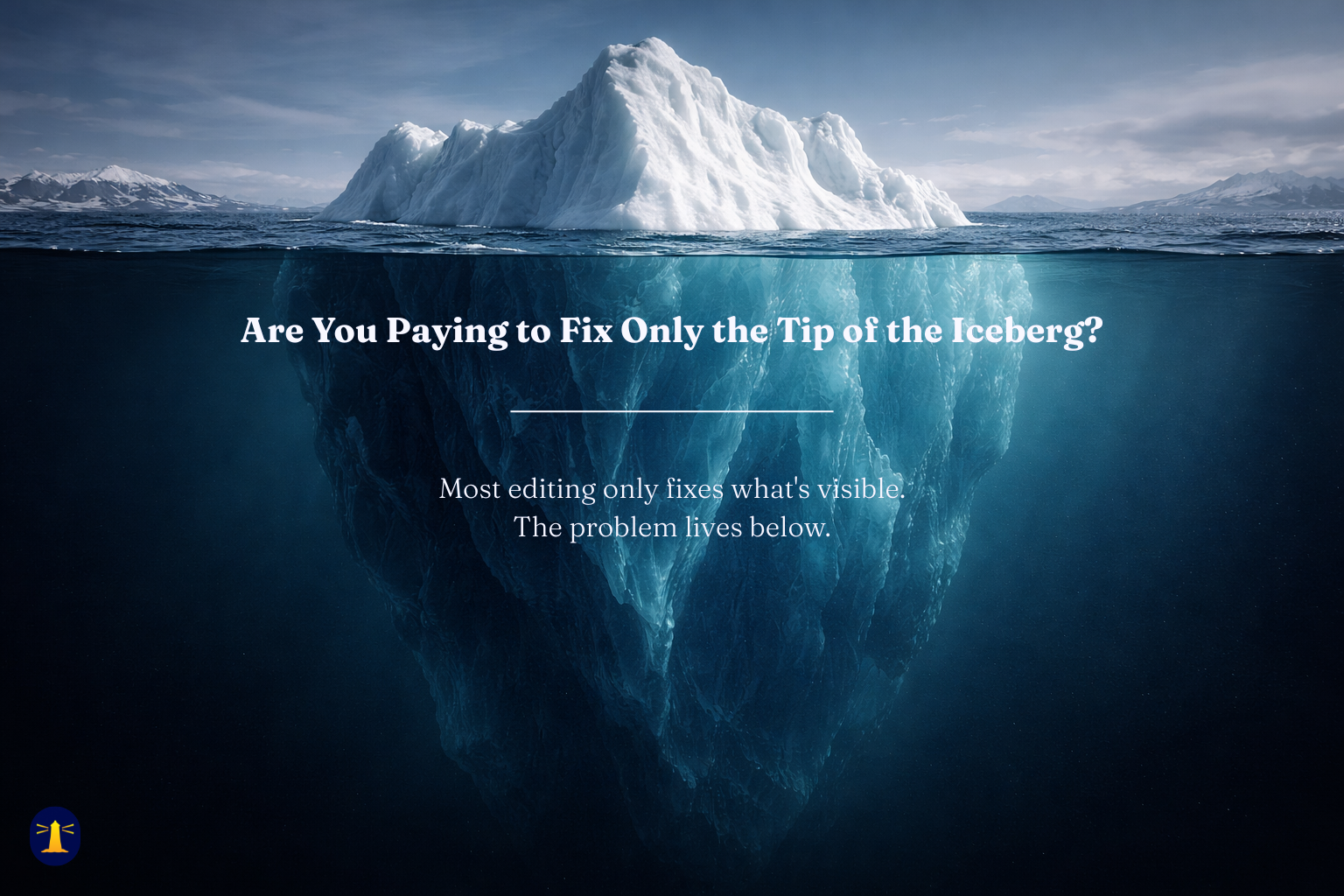
You probably bought copyediting when you needed clarity editing. Copyediting is a surface fix; it polishes your business writing. But copyediting doesn’t change what the business writing is saying, how it builds trust, or whether it answers the reader’s real questions in the right order.
It doesn’t rebuild the structure.
That line explains the mismatch in plain terms. If your message is fuzzy, no amount of comma fixing will make it clear and concise. Your audience doesn’t reward correctness if they can’t follow the point. They need concise, simple language to grasp it. They may even judge a clean but confusing document more harshly, because it looks confident while leaving them lost.
The stakes show up fast in business:
- Leads take longer to convert because they need extra calls to understand you.
- Prospects ask for details that the document should’ve made obvious.
- Your team interprets the same page in different ways, so delivery gets messy.
- Trust slips, because unclear writing harms your tone and credibility; it feels like unclear thinking.
It’s like handing someone a perfect map with no destination marked. The paper looks great. The trip still fails.
The signs you have a meaning problem, not a grammar problem
You can spot this without being an editor. After someone reads your page or proposal, even if it uses plain language and short sentences,
- they still ask, “So what do you do?”
- “is this for me?”
- they misunderstand your offer
- they can’t repeat your main point back to you
Sometimes you get the most frustrating signal of all: polite silence, followed by no next step.

When a document comes back edited but still doesn’t land, the problem isn’t the sentences.
What copyediting fixes well, and what it cannot touch
Copyediting is valuable work when you use it for the right job. It typically focuses on things like spelling, punctuation, grammar, consistency, and obvious awkward phrasing. It also catches small errors that make you look rushed, such as mismatched headings, uneven capitalization, or a term spelled three different ways.
That kind of polish matters. That polish reduces distractions, protects your credibility, and helps your writing feel professional.
Still, copyediting can’t decide what your reader needs first. It can’t choose your main promise, or strengthen your logic, or re-order your argument so it lands. It can’t switch from passive voice to active voice for better impact, or fill missing steps in your explanation, because that requires someone to step back and ask, “What would a first-time reader assume here?”
That’s why you can get a document back that looks spotless and still doesn’t work. Every sentence can be “right” in isolation, while the whole piece stays confusing.
A good way to think about it: copyediting makes your existing message easier to read. It doesn’t make the message true, complete, or persuasive. If the thinking is tangled, the edit may even make the tangle smoother, which can hide the real issue until a prospect walks away.
Why a clean sentence can still confuse a reader
Confusion comes from gaps, not mistakes. Your document may assume insider knowledge. It may use jargon or buzzwords without defining them. Sometimes the main promise is buried under background. In other cases, you explain features before outcomes, even though the reader needs the outcome to care about the features.
Here’s a simple example. A sentence like “We provide end-to-end support for compliance documentation” can be correct and still unclear. End-to-end for which stage, for which industry, and for which risk? Without context, a reader can’t tell if you mean “you’ll do it for them,” “you’ll review what they wrote,” or “you’ll train their team.”
Clarity isn’t only sentence-level. It’s sequence, context, and decision support. And even the most sophisticated AI can’t fix these gaps.
When an Editor Rebuilds the Message
When the work goes deeper, the focus shifts from fixing sentences to achieving clarity in writing by guiding readers. The editor helps rebuild your business writing so you say the right thing, in the right order, with the right amount of detail, for the right audience.
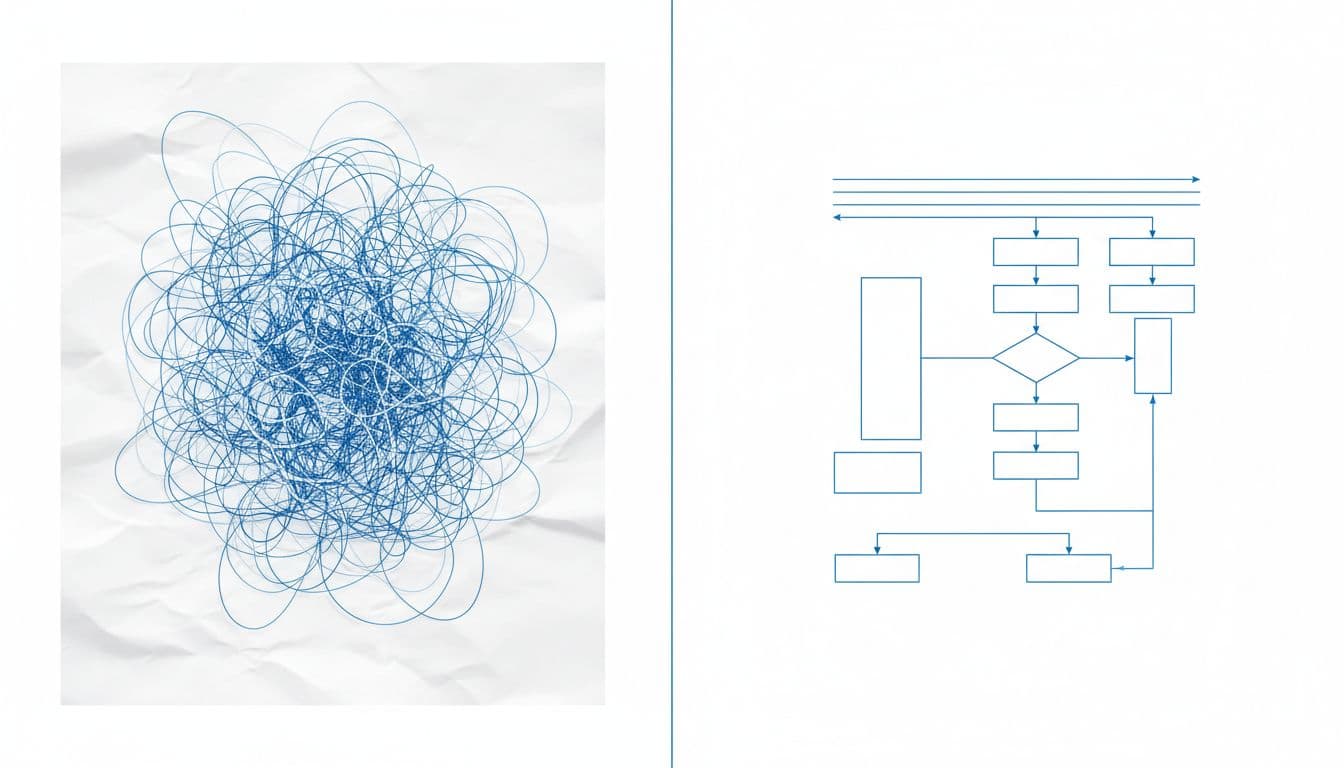 In practice, clarity editing turns a tangle of sentences into an organized thought diagram.
A good clarity editor starts by locking in the main promise: one sentence, plain truth, no slogans. Then she maps the reader path. What does a busy buyer need to understand in the first 10 seconds? The first minute? The first page?
Next, sections move with smooth transitions. Subheadings, bullet points, and white space organize the logic so headings stop being labels and start doing work. Repetition gets cut, but only after the main point is stated clearly once. Weak claims get tightened with active voice so you don’t over-promise, and tangled noun phrases get converted to active verbs for better flow. Missing steps get added, especially where a reader would otherwise think, “Wait, how does that work?”
Tone also gets aligned with trust and the stakes of the document. If your writing sounds too casual for a high-stakes service, doubt creeps in. If it sounds too formal for a friendly, fast service, you can seem cold or hard to work with. The goal is simple: your voice stays yours, but the page speaks to the audience you actually have.
The Business Editing Ladder is a practical diagnostic, not a set of fancy labels. It matches the help to the problem. Most editors think in ladder terms for books. This FPS ladder is built for business.
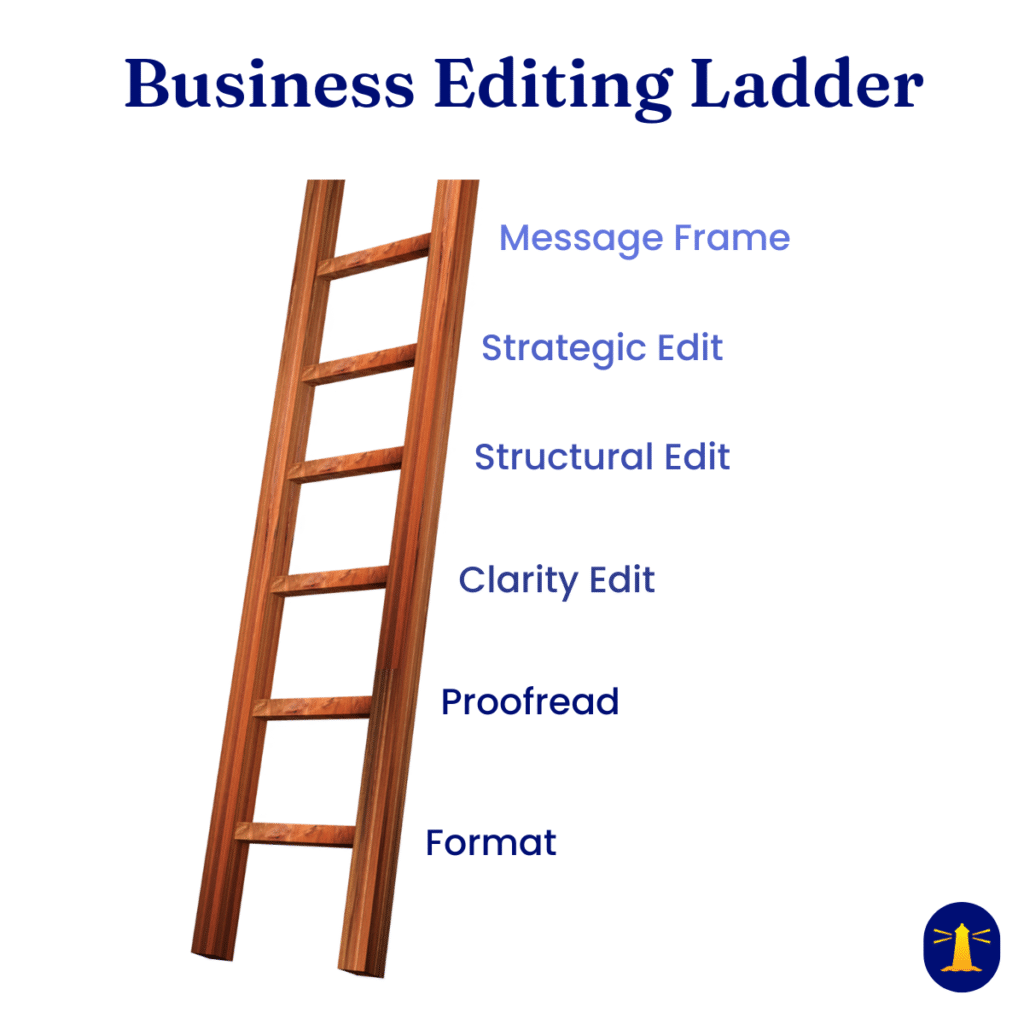
If you want a quick starting point for your business writing document, you can use a free diagnostic tool to see whether your issue is surface-level or clarity-level.
The before-and-after outcome you should expect from clarity editing
After clarity editing, readers understand you faster through effective business communication. They can explain what you do without guessing. They ask better questions, because the basics are already clear. Just as important, the next step becomes obvious, whether that’s booking a call, replying with details, or choosing a package.

Clarity editing shifts the outcome: readers understand faster, ask better questions, and know what to do next.
On the business side, you spend less time explaining. Sales cycles shorten because fewer people drop out from confusion. You also reduce revision loops later, since internal teams can follow the same logic and use the same language.
A strong document doesn’t make your reader work. It carries them.
How to Diagnose the Editing You Actually Need
The good news is that you don’t need an editor to figure this out. You just need to ask the right question: where did my reader get lost?
If they got lost at the surface, the signs are typos they mentioned, formatting that looked rushed, or terms that were inconsistent. That’s a copyediting gap. Easy to fix, easy to scope.
If readers got lost in the middle, the signs are different. Your reader understood your sentences but couldn’t follow your argument. They read the whole page and still asked what you do. They couldn’t find the next step. That’s a structural editing problem. Copyediting can’t fix this problem.
If readers got lost at the beginning, they stopped reading before they had a reason to continue. That’s a strategic editing issue. Your main promise didn’t land in the first paragraph, or it wasn’t there at all.
The Business Editing Ladder maps directly to these three levels. Surface, structure, strategy. Once you know where your reader lost the thread, you know which rung you needed.
What to Do If Your Document Still Isn’t Landing
Start by naming what the document is supposed to do. One sentence. Not “explain our services” but “get a prospective client to book a discovery call.” That job description tells you what success looks like, and it tells an editor where to focus.
Then read your document as a stranger would. Not line by line. Start to finish, at reading speed, without stopping to fix anything. Reading it out loud helps this step. Notice where you slow down, where you backtrack, where you feel like something is missing. Those moments are your diagnosis.
If you find surface problems only, a copyeditor is your next call. If you find yourself confused about the order, the logic, or what the document is actually asking the reader to do, you need something deeper. The Editing Cost Calculator can help you scope that before you commit to anything.
How to Avoid Paying for the Wrong Kind of Editing
The fear is reasonable: you don’t want to spend more money and end up in the same place, with a cleaner document that still doesn’t perform. The fix is to match the editing to the document’s job and audience before anyone touches a comma.
Start by naming the job in one line. Is this page meant to sell a service, explain a process, onboard a client, pitch a partnership, or support a decision? Each job needs a different kind of clarity in business writing. A sales page needs a clear and concise promise and a clear call to action next step. An SOP needs concise steps that can’t be misread. A proposal needs logic that holds under scrutiny in plain language.
Then check where you’re stuck. If people already understand you but notice typos and grammar issues, surface copyediting or proofreading is enough. If they don’t understand you, perhaps due to jargon, you need message and structure help first and polish last.
Budget matters, too. Paying once for the right help can cost less than paying for multiple rounds of surface edits, plus the hidden cost of lost leads and extra meetings.

Before you hire anyone, ensure alignment on these points:
- Your reader and their situation: Who will read it, what do they already know, and what are they worried about?
- Your main point and next step: What should they remember, and what should they do right after?
- Your structure plan: Will the editor recommend moving, cutting, or rebuilding sections if needed?
- Your deliverable: Will you receive comments and questions, rewritten sections, an updated outline, or all of the above?
That short check protects you from buying the wrong service.
Questions to ask before you sign another editing invoice
You don’t need special language to screen an editor. You need practical questions that reveal how they think.
Ask how they’ll confirm your main point, your reader, and the next step. If they can’t describe that process, they’re likely working sentence by sentence. Also ask whether they will recommend re-ordering sections when the flow is backwards. A “no” can be a red flag when your document already fails.
Next, ask if they’ll flag missing information and weak logic to avoid fluff and improve word choice, not just awkward wording. Then ask what the deliverable will look like. Will you get a marked-up document only, or will you also get guidance on what to change and why? Finally, request a small sample edit or a short diagnostic review, so you can see whether they demonstrate business writing skills beyond mechanics.
You’re not shopping for perfection. You’re paying for a reader’s experience that leads to action.
Frequently Asked Questions About Clarity Editing
Copyediting is typically priced by word count and runs lower because the scope is predictable. Clarity-level work, which involves restructuring, repositioning, and rebuilding the argument, is scoped by the document’s job, complexity, and what it needs to do for your reader. The Editing Cost Calculator can give you a starting range on either of these before you commit to anything.
Some editors work across multiple levels, but it’s worth asking directly. The skill sets are different. A copyeditor trained to preserve your sentences may not be positioned to challenge your structure or reorder your argument. Ask any editor you’re considering: will you flag if the document needs structural work, not just surface copyediting?
Start with the question in this post: where did your reader get lost? Surface confusion points to copyediting. Message or structure confusion points to clarity editing. If you’re not sure, the Editing Cost Calculator includes a diagnostic prompt that can help you name the problem before you scope the solution.
Service pages, proposals, white papers, onboarding documents, and anything a prospect reads before deciding to trust you. If the document is doing a high-stakes job and your reader needs to understand you quickly, clarity matters more than correctness.
The document, the audience it’s written for, and one sentence describing what you want the reader to do after reading it. That combination tells an editor more than the word count does, and it protects you from getting a quote that’s scoped for the wrong job.
The Part Where You Decide
When a document doesn’t land, the instinct is to fix the wording. But if the problem is the message or the structure, cleaner sentences won’t solve it. You’ll just have a more polished version of a document that still isn’t working.
Your assessment is simple, even if the answer takes a minute: where did your reader get lost? At the surface, in the structure, or before they ever found the point? That answer tells you what kind of help you actually need, and keeps you from paying for the wrong fix. Treat editing as levels, then choose the level based on what the document must accomplish and the audience that must trust it.
Keep the Key Points Close
If this post gave you a useful frame, you might want the companion reference:
Where Did Your Reader Get Lost? A Three-Level Editing Diagnosis
This FPS freebie is a one-page guide that walks you through surface, structure, and message problems so you can name what’s wrong before you hire anyone.
👉 Download it free (in the Freebie Library)
Not Sure What Level You Need?
If this post helped you name the problem, the next step is scoping the fix:
Editing Cost Calculator
This third-party, unbiased calculator is a free tool that helps you estimate the cost of the kind of editing your document needs.
👉 Access the Editing Cost Calculator

Thanks for reading — here’s to clearer writing and stronger ideas.
~~ Susan