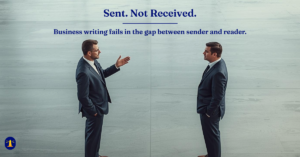

If you run a business or work as an independent professional, your writing does a lot of heavy lifting for you. It has to be clear and steady. It has to sound trustworthy. It also has to sound like you, because your clients are responding to your judgment and your presence as much as your expertise.
This matters even more when you are the face of your own business. You’re not writing on behalf of a large organization. You’re writing as the person someone will meet on a call, trust with a project, or bring into their decision-making process. If the writing feels generic or overly polished, it weakens that first impression. Your voice becomes part of your credibility. It shapes what clients believe it will be like to work with you.
Key Takeaways
- Editing can protect and strengthen your natural voice when it is treated as a partnership, not a rewrite.
- Your voice lives in tone/emotion, rhythm, and word choice, while clarity edits focus on grammar, structure, and flow.
- A multi-pass editing process (diagnostic skim, silent fixes, focused edits, and final sweeps) keeps your voice consistent from start to finish.
- Active collaboration, clear preferences, and track changes help you stay in control of how your writing sounds.
- Simple habits, like reading aloud and naming non-negotiables, make it easier for an editor to keep your voice intact.
That is why many small-business writers feel hesitant when they think about hiring an editor. They want support with clarity, structure, and polish, but they worry that their natural tone will be erased and replaced with something stiff or impersonal. They want their writing to work harder without losing the warmth and character their clients respond to. They need their writing to have their voice.
When I talk about your voice, I don’t mean a literal transcript of how you sound in conversation. Spoken language is full of half-sentences, detours, and filler words. All perfectly normal in person, but distracting on the page. Your author voice is the clearer, more intentional version of how you think and communicate. It carries your tone (emotional flavor), your rhythm, your perspective, and the way you naturally relate to clients. It’s the “you” people recognize when they talk with you … just without the ums, the start-overs, and the mid-thought pivots.
In this post, I am going to walk you, step by step, through the editing process I use while maintaining author voice. This is very different from the editing I do when your writing needs to match a particular style (bureaucratic, executive, policy, or academic). I will show you what I change, what I do not touch without a conversation, and how we work together so your writing comes out clearer and stronger while still feeling like you wrote it on your best day.
Future Perfect Services supports a wide range of writers, including independent professionals, small business owners, academic authors, creative writers, and business and government teams. The process I describe here applies across all of those sectors, because every writer deserves clarity that strengthens credibility without losing the sound of their own voice.
Everything I describe here is human-led. I use tools when they help, but I absolutely will not hand your voice over to AI to polish. Preserving voice is the main asset I protect. The edits are there to support your voice, not to replace it.
What Your Voice Is (And Why I Protect It When I Edit)
Your voice is the pattern your writing falls into when you stop trying to sound impressive and just say what you mean, plainly.
It lives in elements of your writing style like:
- The way you greet people. “Hi team,” versus “Hey friend,” versus no greeting at all.
- How you give advice. Gentle and reflective, or direct and to the point, or roundabout and metaphorical.
- The types of examples you reach for. Parenting stories, client wins, data, or metaphors from your hobby.
If you’ve ever read a generic business article that felt flat and forgettable, you’ve seen what happens when voice gets stripped out. The sentences are correct. The grammar is fine. But you can’t feel the human being behind the words.
Many writers worry that hiring an editor will move their work in that direction. The fear is real, and some writers have had that experience. Several editors, like those at Clovis Editorial, have written about maintaining author voice while editing, because this concern comes up often.
Here’s how I frame it. Editing while keeping author voice is a partnership. My role is to clarify, support, and sometimes gently challenge. It is not to rewrite your words into mine. If my edits make you sound like a different person, I made the wrong edits.
How I Listen for Your Author’s Voice Before I Touch a Word
Before I start changing anything, I listen.
If we are working together on a website, a report, or a set of articles, I will ask to see a few pieces you already feel good about. I will also look at how you write in lower pressure settings, like emails to clients or team updates.
I am paying attention to patterns, not just errors:
- Do you tend to write in short, punchy lines, or longer, flowing sentences?
- Do you address your reader as “you,” or do you talk about “clients,” “students,” or “participants”?
- Do you like plain language, or do you lean a bit more formal?
I’ll often ask a few quick questions too, such as:
- Who are you trying to reach with this piece?
- What do you want them to know, feel, or do after reading?
- Is there a past blog post or email that felt “exactly like you”?
That gives me a baseline. Before I start editing, I already have a sense of your natural voice. I know what we’re protecting.
Editors who care about voice all have some version of this habit. Inkdeep Editing, for example, talks about maintaining author voice in an edit by listening first, then editing inside that frame. I take a similar approach.
Author’s Voice vs. Clarity: What Changes and What Never Should
A lot of confusion comes from mixing up “author’s voice” with grammatical problems or correctness. The point isn’t to make over your writing into my writing. The point is to be even more your voice because the text is clearer.
Typos, grammatical errors, missing words, and confusing structure are clarity issues. You can see a more in-depth view of clarity being different from voice in my “Stronger Sentences” post. Fixing them does not have to touch your voice at all. In many cases, it lets your voice land more cleanly by being clear and concise.
Have you ever had the experience where you’re struggling with a thesis or a paragraph, and you go talk to someone? and the act of explaining what you mean to a listening human gives you the exact right, clear words? And the person says, “That! Write that down!” Voice lives there, in your tone and your choices as you’re really trying to get your point across, and that’s where I slow down.
Here is how I separate voice from clarity in practice:
I will quietly fix:
- Spelling and punctuation
- Subject verb disagreement
- Repeated words or obvious filler
- Sentences with poor sentence structure that are so long the reader gets lost
I will not change without a conversation:
- Signature phrases you use with your clients as a style choice
- The stories you choose to tell
- Honest emotional beats, like naming frustration or relief
- The level of formality you want to keep
Sometimes a sentence is both “you” and a bit tangled. In that case, I might suggest another version in a comment, in your style, and ask how it feels. The goal is never to flatten. The goal is to help your reader follow your thought all the way through.
If you like to read about editing craft, The Editing Company has a thoughtful piece on honoring the writer’s voice that lines up with this distinction. Clarity and voice are not enemies. They can sit together in the same paragraph when the edits are intentional.

My Step by Step Editing Process For Keeping Your Voice Intact
Here’s the behind-the-scenes view of what actually happens when I open your manuscript. I use the same editing process whether I am working on a sales page, a thought leadership article, or a long report.
At every stage, I am editing while keeping author voice front and center.
First Pass: A Quick Diagnostic Skim to Hear the Whole Piece
My first pass is fast on purpose.
I read from start to finish without changing much. I want to hear
- Who you seem to be talking to
- How confident and grounded you sound
- Where the energy spikes and where it drops
During this skim, I keep a simple set of notes off to the side. I might write things like, “Warm and direct, occasional dry humor,” or “Very formal intro, more relaxed in examples.”
I also mark, usually with comments, places where I lose the thread, where a promise is made but not answered, or where the tone suddenly shifts. I am building a mental “voice map” that I will refer back to in later passes.
No heavy editing happens yet. I want to live in your sound before I start cleaning up sentences.
Second Pass: Silent Fixes That Clean Up Without Rewriting You
On the second pass, I get into the text, but I still stay close to the surface.
This is where I
- Fix spelling and grammatical errors
- Correct small punctuation problems
- Add missing words or prepositions when the meaning is plain
- Break up very long sentences to improve sentence structure if they tire the eye
I respect natural speech. If you often say, “That’s the part I’m most proud of,” I am not going to turn it into, “This is the area of which I am most proud,” just to score grammar points. Rules are there to help you sound clear, not to strip out how real people talk.
By the end of this pass, the piece is already cleaner and easier to read, but you would still recognize every line as yours.
Third Pass: Focused Edits With Comments, Not Commands
The third pass is where stylistic editing comes into play.
Here I might suggest
- Making structural changes by reordering sections so the reader is walked through in a clearer way
- Cutting repetition that blurs your main message
- Adding a short bridge sentence so a jump in logic makes sense
Any time a change might touch your tone or your intent, I use comments and questions rather than silent rewrites. For example, I might write:
“This paragraph is powerful, but it is doing three jobs at once. What do you think about splitting it in two? Here are two draft versions with rewriting passages, using your language.”
Then I will offer two or three options that still sound like you, and invite you to tweak them further. That way, the changes and revisions become a conversation instead of a verdict.
Editors in many fields use this kind of collaborative approach. Even in scientific publishing, where tone can be strict, a copyeditor talks about preserving author voice during copyediting by treating revisions as proposals, not orders. I hold to the same standard for your business writing.
Final Sweeps: Checking for Consistent Voice From Start to Finish
The last pass is short and focused.
I read with your ideal client in mind and ask:
- Does the tone stay steady from intro to call to action?
- Do the promises at the top get answered by the end?
- If someone met you after reading this, would you feel like the same person?
I check headings, links, and any calls to action to make sure they still sound like you, not like they were pasted in from a template. Only when the voice feels consistent do I consider the piece done.
How We Work Together So Your Edited Writing Still Feels Like You
Editing is not a one-sided fix. It works best as an ongoing, respectful working relationship.
Most of my clients do not have a communications team. They are running their own practice, consulting, or leading a small organization. Their writing has to stay personal enough to feel human and, at the same time, polished enough to carry weight.
Part of my job is to keep you in the loop about choices, not just send back a marked-up file. Resources for independent writers, like Indie Author Magazine’s guide on preserving author voice during editing, make the same point. You deserve to understand what changes are proposed and why.
Here is how I keep your voice safe while we work together.
Simple Questions I Ask So I Can Match Your Style
At the start of a project, I like to ask a few short questions. They take only a few minutes to answer, and they give me a clear sense of your preferences.
For example:
- How formal do you want your tone to sound on a scale from “text to a friend” to “court filing”?
- What do your clients say they like about your style choice? Calm, funny, clear, kind, direct?
- For this piece, should the tone land closer to “friendly guide” or “trusted expert”?
If we work together more than once, I will keep refining that picture. You might say, “I like that level of formality for white papers, but I want blog posts to feel lighter.” That’s helpful because it tells me which dials to adjust in each project.
Even if you’re not working with me, thinking through those questions will help you brief any editor you hire.
How I Use Track Changes and Comments to Keep You in Control
I use track changes for almost every project, because I want you to see what I touched.
You can accept changes you like, reject ones that do not fit, and reply to my comments. It turns the document into a quiet conversation, even if we are in different time zones and working at odd hours. For complex changes, I will query the author so we can manage the complexity without lots of emails.
If a change feels less like you, I want to hear that. “This sounds more formal than I would say it,” is useful feedback. We can then adjust the edit, or set a new guideline for the next piece. You have the final say through your author decisions.
This is the opposite of the old red pen feeling many of us remember from school. The power doesn’t sit with the editor. It sits with you, supported by a copyeditor who knows how to make your writing clearer.
When I Push Back (Gently) and Why That Still Honors Your Voice
Sometimes my role is to say, “I know this sounds like you, but it might land in a way you don’t intend.”
Common examples include
- Strong language that might undercut trust with a cautious readers and audience
- Jokes that could confuse readers who don’t share your background
- Promises that are too big or too vague to back up
If you write, “I can fix your strategy in one call,” I might suggest, “We can make real progress in one call,” instead. The direct, confident tone stays. The unrealistic promise softens.
I will always explain why I’m nudging a line as editor advice. The goal is not to make you bland. The goal is to protect your relationship with your reader.

How You Can Prepare Your Draft for Maintaining Author Voice in Editing
Your part in editing while keeping author voice actually starts before you send me the draft.
There are a few simple steps you can take that make a big difference in how clearly your voice comes through.
Some writers are curious about using AI tools here. That can be helpful in small ways, but it also carries risk. As one writer put it in a piece on how to edit without losing your voice using AI, the editing phase is where your voice is most vulnerable. My view is that human-led clarity, plus a few small habits on your side, still does the best job of protecting it.
Read Your Draft Out Loud and Mark the Lines That Sound Most Like You
Before you send a draft, read it out loud.
Notice what happens:
- Some sentences will feel smooth and natural, reflecting your natural writing style.
- Others will feel stiff, like you’re doing an impression of “Professional Writer.”
Highlight the lines that feel most like you. Those are the ones you are proud of, or the ones that make you think, “Yes, that is exactly how I would say it to a client.”
If you share the document with me, you can add a quick note: “These highlighted lines feel the most ‘me’.” I’ll pay special attention to them and use them as anchors while I edit.
You can also flag any lines that feel off. I can help you rewrite those so they still carry your idea, but they’ll flow in a way that matches the rest of your voice.
Tell Your Editor What Matters Most: Non-Negotiables for Your Voice
It helps a lot when clients tell me what is non-negotiable before I start, including your key author decisions.
You might say:
- “I always use first names, never titles.”
- “I want to avoid overused techniques like jargon as much as possible.”
- “I like to tell short personal stories, even in serious pieces.”
- “I use a lot of knitting metaphors, because my readers relate to those.” (my personal favorite)
You can put this in a short note at the top of the document, or in your email when you send it. The point is to state your guardrails out loud.
Share Your Style Sheet
If you have a style sheet, share it. If your style sheet does not include notes about your non-negotiables, this is a great chance to add those, capturing them for all time and for consistency.
Editors who care about voice, like the ones writing at Inkdeep Editing or similar shops, welcome this kind of clarity. It lowers the risk of “over editing” and lets us spend our energy on the parts you are happy to adjust.
When you name what matters most, you turn editing into a safe space rather than a test. You’re not being judged. You’re getting support.
🐾 Finnegan’s Opinion

Finnegan has a habit of curling up near me when I’m editing long drafts. He naps through most of the work, but every now and then he lifts his head, stretches, and gives me a look that feels a little like quality control. It’s a good reminder that clarity doesn’t have to be rushed. A steady rhythm, a bit of curiosity, and the sense that someone’s keeping quiet watch can go a long way.
FAQ
An editor can improve your writing while keeping your voice by separating clarity issues from voice decisions. Clarity work includes fixing typos, grammar slips, missing words, and tangled sentences. Voice lives in your emotional tone, preferred phrases, types of stories, and level of formality. A voice-aware editor protects those choices, asks questions before changing anything that affects tone, and treats edits as proposals, not orders. The goal is cleaner, stronger writing that still sounds like you on your best day.
Silent changes work best for clear errors and small fixes that do not touch how you sound. This includes spelling and punctuation, subject-verb agreement, repeated words, and very long sentences that confuse the reader. A writer should not have to plow through approving every punctuation mis-step. But an editor should pause to ask before changing your main point, your signature phrases, your stories, your emotional tone, or how formal or informal you want to be. When a sentence is both authentic and a bit tangled, a good editor suggests options in your style and invites your feedback.
A voice-safe process usually moves in several passes. The first pass is a quick diagnostic skim to hear the whole piece, spot tone shifts, and note where the energy rises or dips. The second pass handles silent fixes that clean up grammar and mechanics without rewriting you. The third pass focuses on structure, repetition, and logic, using comments and questions instead of heavy-handed rewrites. A final sweep checks that the tone is steady, promises in the introduction are met, and the voice on the page matches how you show up with clients.
Keeping authors involved starts with simple questions about audience, tone, and goals, along with examples of past pieces that felt “exactly like you.” During editing, track changes and comments make every suggestion visible. Authors can accept or reject changes, respond to questions, and flag anything that feels less like them. When an editor explains the reason for a suggested change, especially around strong language, jokes, or big promises, the author can decide what to keep, soften, or rewrite.
You can protect your voice before editing begins by reading your draft aloud and highlighting lines that feel most like you. Those lines become anchors for the edit. You can also mark any lines that feel stiff or unlike your usual way of speaking, then ask for help bringing them into line with the rest of your voice. Finally, tell your editor your non-negotiables, such as preferred form of address, stance on jargon, or use of personal stories. Clear guardrails make it easier for an editor to support your sound instead of overriding it.
Bringing It All Together
Good editing, focused on preserving voice, should make you sound more like yourself, not less.
My whole editing process, from that first fast skim to the final sweep, is built around editing while keeping author voice. I listen for your natural sound, I fix what blurs your message, and I invite you into every change that might touch tone, confidence, or personality.
If you’ve had a bad experience with heavy-handed editing in the past, I hope this behind-the-scenes tour shows that it doesn’t have to be that way. Editing is something we do together, not something done to your draft. The whole experience can be a calm, respectful partnership built on empathy that helps your best ideas land with the people you want to reach.
Your voice is an asset in your small business. With the right process and working relationship, you don’t have to choose between sounding human and sounding professional while achieving clarity and concision. You can have both, and your readers and audience will feel the difference.
If you want your business writing to stay clear, steady, and unmistakably yours, there are simple ways to protect your voice while strengthening the structure behind it. You don’t have to choose between sounding human and sounding professional.
If you are at a point where a thoughtful editorial partner could help you bring clarity to a project, I would be glad to look at your draft and offer a quiet, grounded assessment of what would help it land with the people you want to reach.
🧭 Request a thoughtful estimate for your next piece.
Need a clearer path forward in your work?
Many independent professionals carry heavy cognitive loads. Coaching can help sort through the noise so you can see your next step with more confidence and less strain. If you want a calmer way to move through your week, we can explore that together.
👉 Start the conversation →

Thanks for reading — here’s to clearer writing and stronger ideas.
~~ Susan