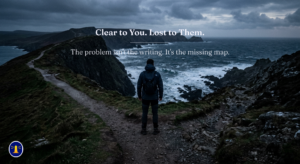
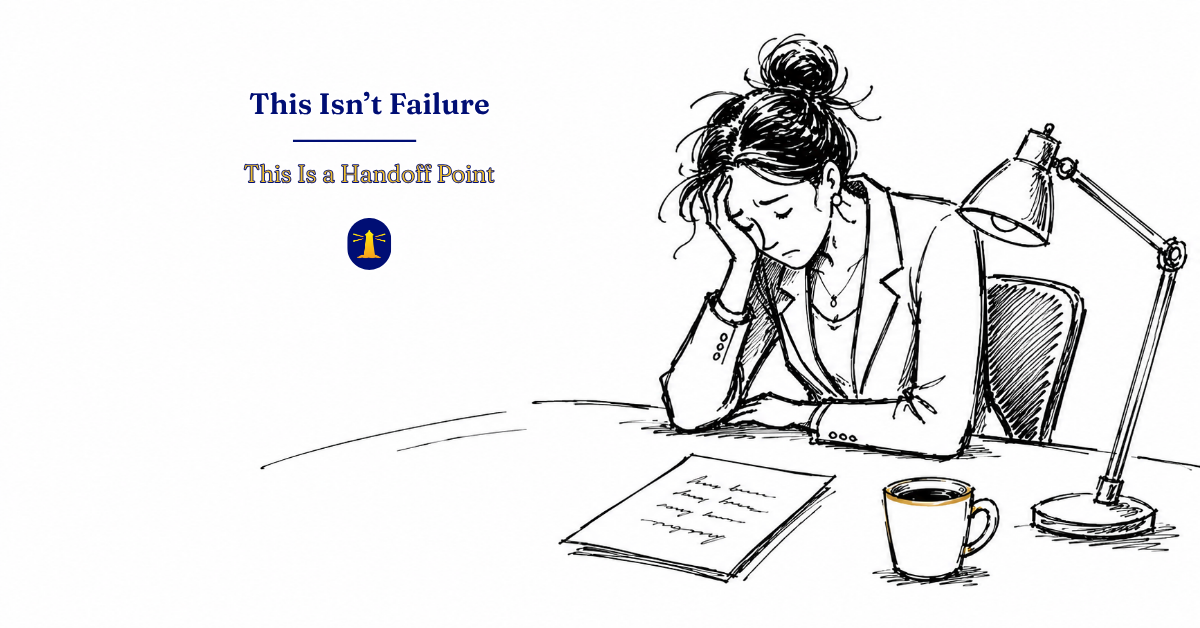
If you’ve gotten feedback on something you worked hard on and felt the floor shift a little, you know that bad feeling. Some feedback lands like a door closing quietly. Some lands like a verdict. I’m not talking about a markup here or there, or a tracked change. I’m talking about “The Note.” Maybe two sentences. Always includes “This needs more work before it’s ready.” And then nothing. No map. No next step. Just you and a piece that isn’t working and no clear idea why.
You read it again. You’re hoping it will say something different the second time. It doesn’t. So you sit with it, turning it over, trying to locate where the problem is. You know the piece because you’ve been living inside it. You can’t see what they saw, and that’s awful part: not the feedback itself, but the not knowing.
That moment has a name, even if nobody uses it in professional settings. Some people call it soul-crushing. It’s the moment the belief that you could handle this stops being automatic. It’s also the moment you realize you’re in the big leagues.
means you’ve gone as far as solo can take you.
Because here’s what The Note actually signals, and this matters: the person who gave it to you made a professional judgment. They decided not to mark every sentence, not because they couldn’t, but because they chose not to. In serious writing environments, you don’t hand someone a document bleeding red from top to bottom. That’s not editing. That’s a verdict with footnotes. So they pulled back, wrote two sentences, and handed it back to you. That restraint was a courtesy, not a dismissal.
I’m not going to tell you it doesn’t sting, because it absolutely does. But what I do want to talk about is what The Note actually means, because it doesn’t mean what most people assume it means.
Hundreds of Edits, Always Something
For years, I wrote for some of the most demanding audiences in existence. Senior government officials, four-star generals, and the senior-most levels of the U.S. government. The writing standards in that environment are not generous. The stakes are not abstract. And the editing is relentless.
In that environment, everybody’s work got reviewed before it moved. That wasn’t a sign of distrust. It was how serious writing worked, baked into the culture so thoroughly that it didn’t even need a name. You wrote it, someone else read it, it got better, it went up the chain. Two pairs of eyes wasn’t a process, it was just what you did.
Here’s something most people outside that world don’t know. When editors read over a piece before beginning and have that “oh, shit” moment of awful realization that the whole piece needs a rework and the feedback is going to sting, we stop editing. Instead of starting a heavy mark-up, we write a note instead, because handing someone a draft with changes in every single sentence isn’t editing. It’s rewriting. And a professional won’t do that to a colleague.
That’s a distinction worth sitting with. The note isn’t the consolation prize. The note is the honest answer. It means the piece isn’t ready for copy editing yet, and a good editor won’t pretend otherwise by marking it up anyway. What you’re holding when you get The Note is a professional judgment delivered with restraint. The person who wrote it respected your work enough not to discard the draft and completely rewrite your work.
So The Note, the one that tells you the piece needs work without showing you where, isn’t vague feedback. It’s a professional courtesy. It means the piece needs something more foundational than copyediting, and the person reading it respected you enough not to pretend otherwise. And it’s a signal that you need to go get help from someone.
And Sometimes, The Edit Was Perfect
Some of those edits made me pretty mad (see my blog about the difference between past tense and passive voice, which was a rant about people who didn’t know the difference). I kept my feelings private each time, because I was a professional, but the editor was wrong and I knew it, and the change weakened the work. I’d assemble my evidence and push back. Mostly I won. Sometimes the changes didn’t really matter and I just rolled with them.
What I learned from that process wasn’t deference. It was discernment. You learn to tell the difference between an edit that improves the work and an edit that just reflects the editor’s preference. Both exist. A good writer knows which is which, and a good writer pushes back on the second kind. That’s not arrogance. That’s how the collaboration is supposed to work.
And sometimes, like a great bell ringing in my head, an edit was brilliant, valuable and so necessary, and just perfect. And I thought: Oh. I didn’t see that. How did I not see that?
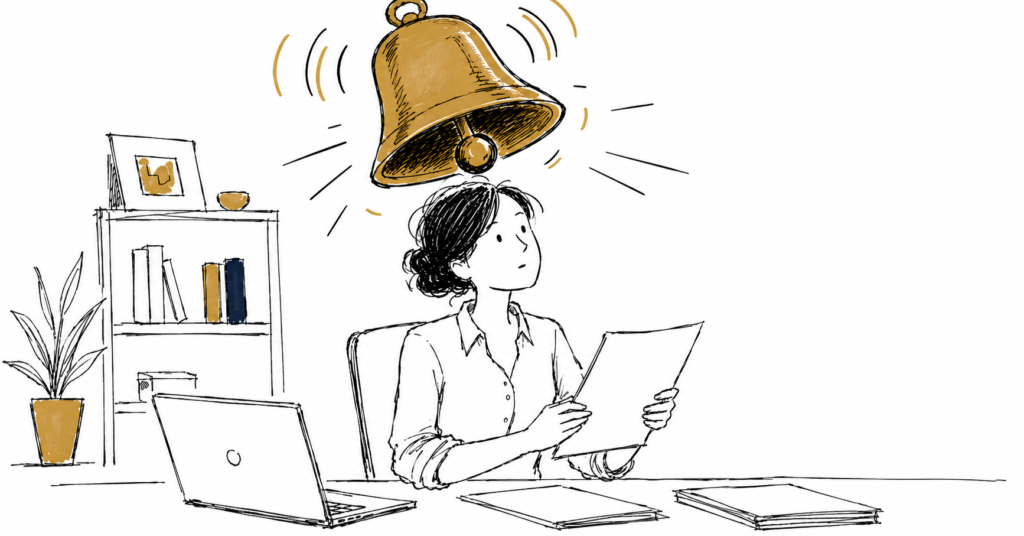
That’s the one that changes your understanding of the process. Not the comma correction. The edit that shows you where your own proximity to the work had quietly closed a door you didn’t know was there. You were too close. Not too unskilled. There’s a difference, and it matters enormously.
I was not a weak writer in those rooms. I was an experienced, analytically trained professional writing in a high-accountability environment. And I still benefitted from another pair of eyes. And I was grateful for them every single time. The colleagues who gave me those brilliant moments of “I didn’t see that” are the ones I appreciate most deeply. Not because they corrected me. Because they saw something I couldn’t, and they handed the document back to me better than they found it.
The Floor You Didn’t Know You Were Standing On
Inside an institution, there’s a floor. If a piece has to move and there’s no time, someone above you absorbs it. They rewrite the piece, it goes up the chain, and you hear about your performance issue later. That’s not having your back; that’s the work getting done at your expense.
It’s a different case when you’re in a two-person business. Then your partner deals with it, and the harder problem isn’t the rewrite. It’s the conversation afterward.
That floor isn’t always visible until it’s not there. The floor doesn’t get announced in institutions. It’s just built into how work moves through a system. Someone catches it. Someone makes a quiet judgment call. You may not even know it happened.
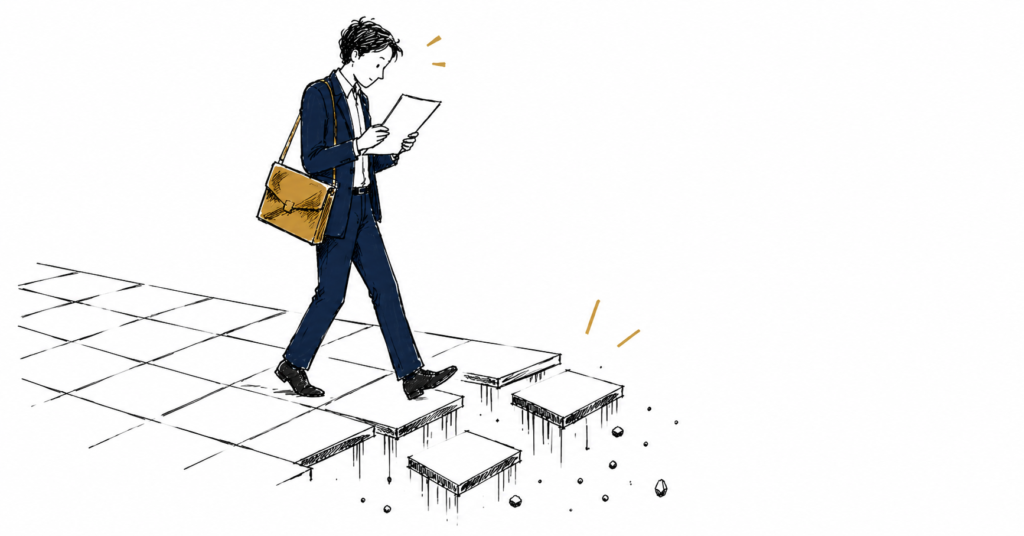
When you’re solo, that floor doesn’t even exist. The piece goes out as-is, or it doesn’t go out at all. It doesn’t matter how you got here, whether you left an organization, built something from scratch, or are still figuring out where you fit. What matters is that right now, when your work falls short, there’s no one to absorb it and fix it. And far too often, instead of getting The Note, the solopreneur gets silence. No customers, no clients, no information. There’s just you, the piece, and the question of what to do next.
That’s not a skills problem. That’s a structure problem. And it’s the same problem whether you’ve been doing this for two years or twenty.
It’s Not a Failing — It’s a Handoff Point
Every writer hits a point where they’ve gone as far as they can go alone. It’s not a function of skill. It’s a function of proximity. The more invested you are in a piece, the harder it is to see it the way a reader will. That’s not weakness. That’s what serious investment looks like from the inside.
We know this story in the fiction world. Best-selling authors talk openly about their editors, thank them in acknowledgments, describe specific moments where the work changed because of a conversation. That narrative exists and circulates and normalizes the collaboration. Nobody thinks Stephen King is a weak writer because he has an editor.
That conversation doesn’t happen in professional nonfiction. There are no keynote speakers crediting their editor. No consultants writing LinkedIn posts about the colleague who caught the structural flaw in their white paper before it went to the client. The collaboration is just as real, just as necessary, and almost completely invisible. Which means every professional writer who needs help feels like they’re the only one, because nobody talks about it.
That silence has a cost. It means the resistance to asking for help gets to look like the normal professional position, when it isn’t. The professionals who resist editorial help the longest are often the most skilled. The competence is real. But competence and proximity are two different things. Being good at your work doesn’t give you distance from it. Nothing does except time or another pair of eyes.
Getting another pair of eyes on your work is not evidence that something went wrong. It’s evidence that you’ve taken the work as far as solo can take it. That’s exactly where solo is supposed to stop.
First, Name the Problem
If you’ve arrived here with a bruise, something didn’t land the way you expected and you’re not sure where to start, the first question isn’t “do I need an editor.” The right question is “what kind of problem do you actually have?”
That question matters more than it sounds. Because if you bring an execution problem to a developmental editor, you’ll get suggestions that don’t address what’s actually wrong. And if you bring a structural problem to a copyeditor, you’ll get clean sentences sitting on a broken foundation. The wrong kind of help, applied confidently, can cost you more time than no help at all.
Sometimes the problem is execution. The sentences, the structure, the mechanics of the piece. The argument is sound but the writing isn’t carrying it. Editing helps with that.
Sometimes the problem is upstream. The argument isn’t fully formed. The reader isn’t being met where they are. The document is doing what you needed it to do six months ago, not what you need it to do now. That’s not an editing problem. That’s a thinking problem that editing can’t solve, and a good editor will tell you so rather than marking it up anyway.
And sometimes you genuinely don’t know which one you have. That’s the most common situation, and it’s exactly what The Note leaves you with. Something isn’t working. You don’t know where. You need someone to look at it before you decide what kind of help to get.
That’s what the Strategic Editorial Diagnostic is for. It’s a focused conversation about your document and what it actually needs next, before any editing begins. Not a sales pitch. Not a scope call. A real editorial judgment about where the work is and what would move it forward, delivered as a usable answer rather than a list of vague suggestions. If you’re not sure whether you need editing or something that comes before editing, a Strategic Editorial Diagnostic is the right place to start.
Keep the Key Points Close
If this post resonated, you might want to download:
Where Did Your Reader Get Lost? A Two-Part Writing Diagnostic
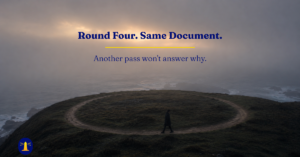
This guide helps you identify where your writing stops working for your reader, before it goes out. If you’ve revised the same document more than twice and still can’t say why it isn’t landing, the next step isn’t another round of editing.
👉 Where Did Your Reader Get Lost? (in the Freebie Library)
Curious About Working Together?
If you’ve gotten The Note and you’re not sure what it means or where to start, that’s exactly what the Strategic Editorial Diagnostic is for. One focused conversation about your document, what’s actually wrong, and what kind of help would move it forward.
Start with the Strategic Diagnostic
Priced by document length, starting at $175.
👉 Strategic Editorial Diagnostic

Thanks for reading — here’s to clearer writing and stronger ideas.
~~ Susan
Frequently Asked Questions About the Strategic Editorial Diagnostic
The Diagnostic is priced by document length, because longer documents require more reading, more analysis, and a longer conversation. A short document of up to 1,250 words is $175. Medium documents up to 3,750 words are $250. Longer documents up to 7,500 words are $350. Documents over 7,500 words are $450. Word count is confirmed at intake.
The Diagnostic includes a focused review of your document and a conversation about what it needs next. For most documents, that conversation runs 30 to 60 minutes. You’ll leave with a clear editorial judgment, not a list of vague suggestions, and a direction for next steps.
That’s a legitimate possibility. Editors are not always right, and a good editor expects to discuss their suggestions. Bring what you received and your own read of it. Part of what the Diagnostic does is help you sort out what’s a real problem, what’s a matter of preference, and what feedback you were right to resist. Discernment goes both ways.
The Diagnostic tells you what kind of help your document needs and at what level. If editing is the right next step, we discuss scope, timeline, and what that would look like. The Diagnostic is not a sales call. If editing isn’t what you need, I’ll tell you that, too.
No. Editing is a collaboration, not a takeover. An editor proposes. The author decides. Every suggested change is exactly that: a suggestion, with a reason behind it. The document belongs to you. A good editor makes the case for what they believe will strengthen the work and then respects your judgment.