

Postcards Aren’t Enough
Last week’s announcement post was just 258 words, basically a postcard. It was honest, but it wasn’t enough. Not after everything that went into the launch: building forms, wiring Zaps, fixing freebies and signatures, and doing all the invisible work. I didn’t just need to check things off; I needed to make sense of it all. That’s a debrief; but not just any debrief. I sat down and made something deeper, because launch week was full of surprises: some amazing, some … educational.
This debrief is my honest recap and a blueprint for anyone navigating a launch of their own, whether it’s a website, a book, or a big career shift.
✅ What Went Well (The Wins)
- Zero-crash rollout: No flames, no glitches, no 404s or “please refresh” errors. The site launched smoothly, and all the big buttons from “Plan the Edit” to “Get an Estimate” did exactly what they’re supposed to.
- Automation did its job: The Zap automations, forms, and HoneyBook handled the essentials: projects, messages, and invoices. The more challenging “magic tricks” (auto-from-email and a few templates) are up in the next deelopment phase.
- Voice and visuals clicked: Visitors are staying on pages, clicking links, and commenting on the clarity.
- The checklist worked: Having a 48-hour launch checklist meant I wasn’t reinventing the wheel at 2 a.m.
😅 What Surprised Me (The “Oh … huh.” Moments)
- I needed more time for the blog: QA, graphics, alt text all took longer than expected.
- OG image gremlins: LinkedIn vs. Facebook image previews are still annoying.
- Self-imposed pressure snuck in: Even with prep, I had to remind myself, “Done is better than perfect.”
🛠️ What I’ll Tweak Next Time
- Block more buffer time for blog prep
- Create fallback copy for delays (Already done! That welcome-style email that explains Page 1 of the invoice? It’s now part of our regular process, ready to go anytime a client needs a gentle nudge before reviewing the formal invoice link.)
- Document image sizes, upload steps, and alt text flow so it’s less cognitive load next time.
- Be clearer with link anchors (Anchor IDs aren’t full URLs … I now triple check.)
- Trust the system more. It’s built for this.
🐾 Finnegan Micro-Break
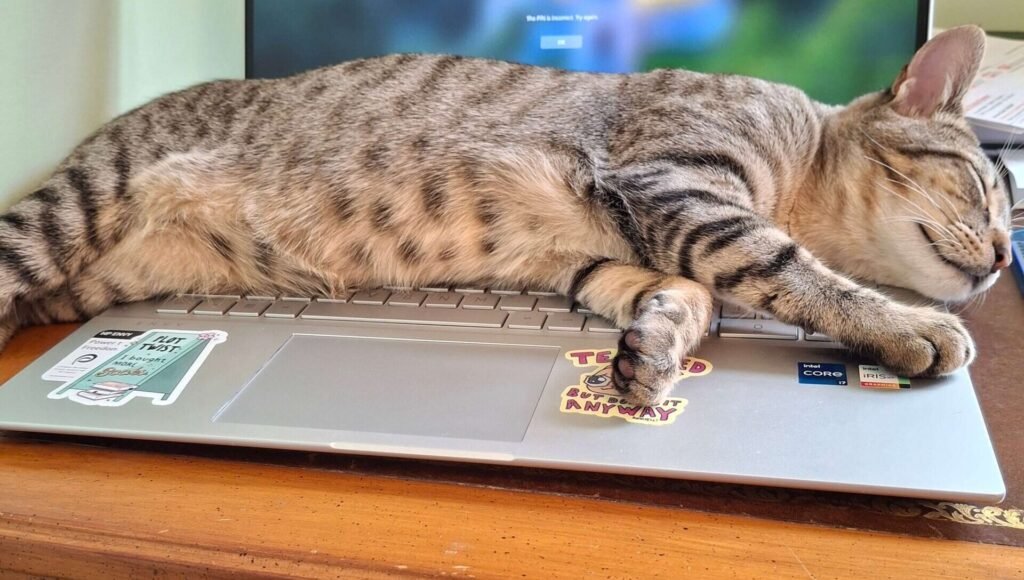
At T–3 hours to launch, I was cross-checking CTA links. Finnegan, naturally, decided that was the perfect moment to sit directly on my keyboard. I now have a draft blog post saved as “asdfzzzzzzzzzzzzzzz. Which, frankly, captures the mood.
Was It Worth It?
Absolutely. This launch wasn’t just about opening a blog. It was about proving to myself that my systems work. That I can run a business on less than 2 hours of admin a week. That clear content, solid automations, and gentle marketing can coexist. Even better? Now that the foundation is solid, I can get back to editing.
Debriefing Without the Jargon: A Gentler Reflection After Launch
Why I Believe in Debriefing
Debriefing isn’t just for the military or big tech teams. It’s one of the best ways I know to learn and to keep learning. When you’re solo, no one calls a team huddle after launch. No one loops back with feedback or celebrates the win. If you want that kind of space, you have to make it yourself. Book launch? Debrief. Big newsletter send? Debrief. Coaching pilot? Same. Even a hard week deserves a moment to look back and reflect.
Why Most Debriefs Miss the Mark
Here’s the thing: most debrief templates feel cold. Corporate. They’re built for deliverables and departments, not for people. I tried one last week and it was full of KPIs and jargon. It wasn’t wrong, but it wasn’t helpful. It didn’t meet me where I was.
So I Made a Gentler Version
It’s short and printable. And it’s for the part of you that wants reflection more than performance. The prompts are simple, the kind you’d ask a friend:
- What lit you up?
- What threw you off?
- What surprised you — not just logistically, but emotionally?
- What would you want your future self to remember?
Get the Free Debrief Worksheet
This isn’t just a checklist. It’s a mirror, a quiet space after a big moment. Whether your launch was technical, emotional, creative, or all of the above, this is a way to slow down and listen to what it meant. So set aside 15 minutes and grab a pen. Maybe pour yourself a second cup of coffee. You don’t need polished answers, just a little honesty.
✨ Download the Post-Launch Debrief Worksheet. It’s a *.docx file, so you can actually type in it.
Take It With You
If you’ve launched something recently, or just came through a long creative push, I hope this helps you exhale. There’s already so much wisdom in you. This is just one way to hear it more clearly. And if you feel like sharing your debrief? I’d love to see what surfaced. Here’s to launches that teach us. To clearer writing, stronger ideas, and softer landings.
Reflection Is a Kind of Risk Reduction
For most of the people I work with (thoughtful writers, retired analysts, first-time authors), the stakes are deeply personal. If something flops, it doesn’t just feel like a failed project. It can feel like you failed. Debriefing helps separate the two. It gives you language for what happened and what you’d try differently, without slipping into self-judgment.
When This Debrief Worksheet Works (and When It Doesn’t)
You don’t need a formal launch to use this. Try it after a first draft, a retreat, a talk, or even a tough week. It’s especially helpful if something went sideways. But if you’re still deep in the chaos, overtired and running on fumes, wait. This tool is for reflection, not for triage. Use it the morning after, not in the middle of the storm.
“It’s not about tracking what went wrong. It’s about seeing what mattered.”
— Future Perfect Debrief Worksheet
The Power of Naming Your Own Patterns
There’s something oddly grounding about naming what always seems to happen. Maybe you always forget how long emails take. Or maybe a kind client comment stays with you longer than metrics ever do. Naming those patterns is how we grow, not just recover. It’s how we carry the learning, not just the exhaustion.
Creative Work Needs Closure
One of the quirks of creative work is how quietly it ends. There’s no final meeting, no handshake, no ceremony. Just a click of the mouse and suddenly the draft is gone, the inbox is quiet, and you’re supposed to be on to the next thing. But your body doesn’t always follow that rhythm. You’ve spent time and energy and care bringing something into the world. It makes sense that you might need a moment to close the loop.
That’s what this debrief is for. Not a worksheet to complete or a checklist to submit. Just a small pause and an exhale. A way to reflect, reset, and acknowledge what you’ve just finished. Even if no one else saw it, you take a moment to say, ‘That mattered.”
This Is Not a Self-Critique
This isn’t an audit, and it’s not about tracking what went wrong. It’s a space to notice what happened and how it felt. You can celebrate; you can grieve; you can scribble a confused ‘Huh’ and call it progress. That counts too.
If There’s Another Launch Coming
If your next push is already on the calendar—maybe a holiday promo or a new program—this tool becomes even more powerful. It helps you choose: what to keep, what to let go of, and what to tweak. It’s like compost. Every project leaves nutrients behind. Don’t waste them.
You’ve Already Done the Hard Part
If you’re here reading this, you already did the hardest part: showing up and launching. This next step, a simple debrief, is just a kindness to your future self. It’s a short pause that creates longer-term clarity. You’ve earned that. Go grab the worksheet. And maybe a little chocolate, too.
A Personal Archive Beats a Performance Review
Most people don’t remember the real shape of a launch. They remember the result, the stress, maybe one moment. But the deeper patterns? What drained you, what fueled you … all that gets lost. This worksheet helps you build your own internal archive, so the next time you’re in it, you’ll remember: “Oh right. This part always feels hard. That’s normal. Last time, I kept going.”

Make Space for Emotion, Not Just Execution
Launches stir up a lot: self-doubt, excitement, exhaustion, pride. And often all in one day! And yet most postmortems only track tasks. So, this one makes space for the human part: what you felt, not just what you did. Because if we don’t name those emotions, they quietly follow us into the next project.
This Isn’t Just for ‘Launches’
You don’t need a business to use this. If you wrapped up anything big, a draft, a personal project, a hard conversation, it’s still valid. This worksheet meets you wherever you are.
🐾 Finnegan Break
This week, Finnegan discovered that cardboard boxes are better than launch reports. He spent a solid 20 minutes doing what I wish I’d done sooner: exploring, crawling into new spaces, and calling them perfect just as they are. That’s your reminder. You don’t have to optimize this debrief. Just show up for it and make it yours.

FAQ: A Gentler Debrief, Explained
Nope. It works just as well after a draft, a big week, or a bold moment.
Then you’re probably doing it right. This isn’t about answers, it’s about listening to yourself.
Absolutely. It was designed for solo reflection, but the questions work beautifully in groups, too.
Because it centers your experience, not just outcomes. It focuses on meaning, not metrics.
Yes. Wait for a little clarity. This tool works best once the noise settles.
Ready to Debrief Together?
Sometimes, you don’t need another checklist. You need someone to witness what you just carried across the finish line. If this worksheet stirred something up, or you’re craving clarity after a big push, I’d be honored to think it through with you.
🟡 Want a free consult? Send me a quick note.
🟡 Or, use this short form to tell me what you’re navigating.
You don’t have to debrief alone. I’ll meet you where you are. And we’ll figure out what comes next, together.
Thanks for reading — here’s to clearer writing and stronger ideas.
~~ Susan