

There is a quiet moment that almost every writer knows. You reread a chapter, feel your stomach tighten, and think, “What was I even trying to say?” The ideas feel foggy. The sentences feel weak. You start to worry the whole project is a mistake.
If you are a self-publishing author, that moment can feel even louder, amplifying imposter syndrome. You are not only the writer. You are also the publisher, the project manager, and the person whose name will sit on the cover. It is very tempting to highlight everything and hit delete.
Here is the part I want you to hear clearly: that spike of self-doubt in writing is not proof that your draft is bad. It is proof that your brain has noticed a risk and is trying to protect you from it. Your nervous system would rather you stay safe than ship a book.
In this post, I am writing from my editor’s chair, not a therapist’s couch. I work with self-publishing authors who have strong ideas and complex drafts, and my job is to bring clarity and calm to those pages. I’m going to walk through how self-doubt shows up on the page, why thoughtful writers are especially prone to it, and how clarity-focused editing gives you a way forward as part of the overarching writing process that does not rely on shame or perfectionism.
Key Takeaways
- Self-doubt in writing often shows up on the page as hedging, over-explaining, or tangled sentences, not just as a feeling in your body.
- Smart, capable writers are prone to self-doubt because their brains are trained to spot risk, imagine criticism, and protect their professional identity.
- Clear, gentle editing helps you separate your ideas from your fears, so you can keep what is strong and trim what is defensive or unclear.
- It is not that your writing is bad, it is that your brain is trying to protect you, and clarity-focused editing gives that nervous system something concrete to do.
- Clarity does not require a perfect draft. It asks for awareness, simple questions, and a repeatable editing routine you can return to when doubt gets loud.
Near the end, I’ll also share a free PDF, “Three Powerful Coaching Questions That Help You Move Past a Stuck Writing Project,” so you have something to reach for the next time self-doubt shows up during revision.
If you want more perspectives from other writers, you might also like K.M. Weiland’s article on proven ways to conquer self-doubt in writing, which pairs well with the editorial lens I’m using here.
What Self-Doubt in Writing Looks Like on the Page
When writers talk about self-doubt, they usually describe negative feelings. Anxiety, embarrassment, a sense of fraud. Helpful for therapy, less helpful for editing.
For editing, I prefer to look at the text itself. Where does that self-doubt leave fingerprints on the page? Once you can see patterns, you have something you can actually change.
Hesitant sentences that keep backing away from a clear point
One of the clearest signs of writer’s doubt in writing is the hesitant sentence. On the surface, it sounds polite and careful. Underneath, it is a sentence that does not quite dare to say what it means.
You might see:
- “This is sort of about how leaders maybe need to listen more.”
- “I guess what I am trying to say is that this could be helpful, in some ways.”
These lines often carry stacked qualifiers, softeners, and vague verbs. Words like “sort of,” “kind of,” “a bit,” “maybe,” “in some ways,” pile up. The sentence stretches longer and longer, then trails off without landing.
From a reader’s side, this feels like walking through fog. The idea might be strong, but the signal is weak. It takes energy to track what you mean.
I do not treat this as failure. Writers who hedge like this often care deeply about fairness and fine detail. They do not want to sound arrogant or absolute. When I see this pattern as an editor, I see a strength that needs structure, not a character flaw.
Overexplaining, apologizing, and talking the reader out of interest
Your inner critic is also very good at adding extra pages.
You might recognize this pattern:
- A chapter opens with three pages of “before I start, let me explain…”
- An exciting scene is buried under long backstory.
- The narrator keeps telling the reader that this “probably isn’t important” or “you already know this.”
In nonfiction, this often shows up as long throat-clearing before the real argument begins. In fiction, it can look like pausing a tense moment to explain a character’s entire childhood.
The root is usually the same. You care about the reader. You want them to have every piece of context. You are afraid they will judge you for leaving something out, or for saying something obvious.
The result, though, is a draft that talks the reader out of caring.
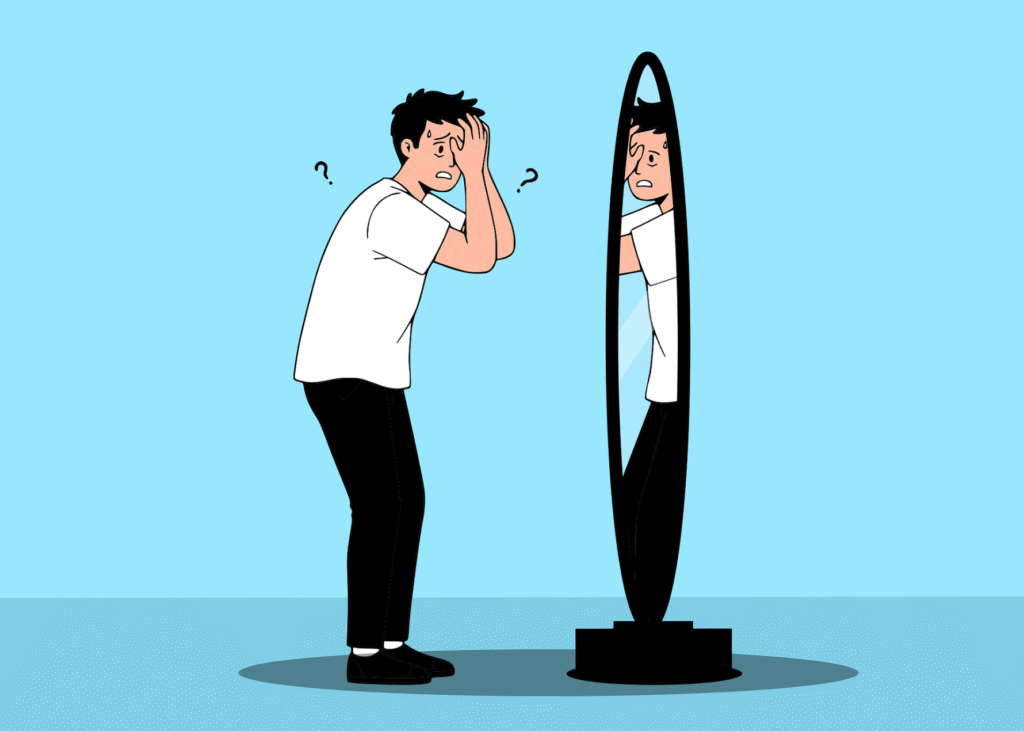
I treat this as an edit problem, not an identity problem. The core scene or idea is often gorgeous once we cut the apologies and move the true start of the chapter up to the surface.
If you want to hear how another working novelist has handled this, Rachel Joyce shares her own experience with overcoming self-doubt as a writer, and there is a clear echo of this pattern in her story.
Tone shifts, sudden pivots, and a voice that does not sound like me
Another subtle sign of self-doubt in writing is a sudden voice change.
You are writing in a natural, grounded tone. Then a topic feels high stakes. Maybe you are talking about your profession, your research, your faith, or your family. Without quite noticing, you flip into a safer, more generic voice.
A few clues:
- You jump from conversational to stiff and academic in one paragraph.
- You move from “I” and “you” to “the author” and “the reader.”
- You copy the style of a textbook, legal brief, or famous author, even though it does not fit you.
To me, this is the inner critic’s push and pull between wanting to sound credible and wanting to sound honest. The brain thinks, “If I sound like a ‘real author’ here, people will take this seriously.” So it drags your voice toward a template that feels safe.
Instead of scolding that shift, I mark it. We ask, “Where do you sound most like yourself?” Then we bring the rest of the chapter closer to that tone, while keeping the level of rigor and care you need for your subject.
Endless tinkering with sentences instead of moving the story forward
Perfectionism likes to wear a suit that looks like discipline. Tinkering is one of its favorite outfits.
You might be stalling instead of polishing if you keep
- Rewriting the first chapter and never reaching chapter three.
- Spending an hour moving commas around in one paragraph.
- “Fixing” the same sentence every time you open the document.
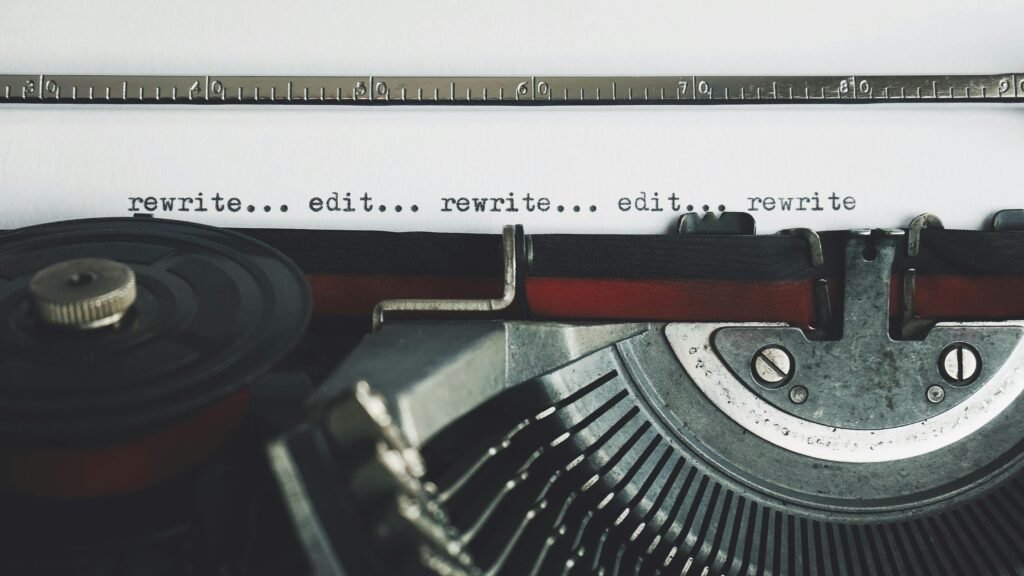
I pay attention to this when clients send multiple versions of an opening chapter, each with tiny changes, while the rest of the draft sits untouched. The fear is often, “If the first pages are not flawless, no one will read on.” So all the energy goes into a narrow slice of the book.
Here is how I approach it as an editor. I use several passes. One for structure, one for clarity and argument, then later passes for rhythm, word choice, and surface detail. When you separate those layers, it becomes easier to move past the first scene and let yourself write the rest of the book.
Writers in online communities talk about this a lot. Threads like this discussion on mid-process self-doubt are full of people who feel “productive” while tinkering, but know they are really stuck in their creative process. Naming it helps.
Why Smart, Thoughtful Writers Get Stuck in Self-Doubt
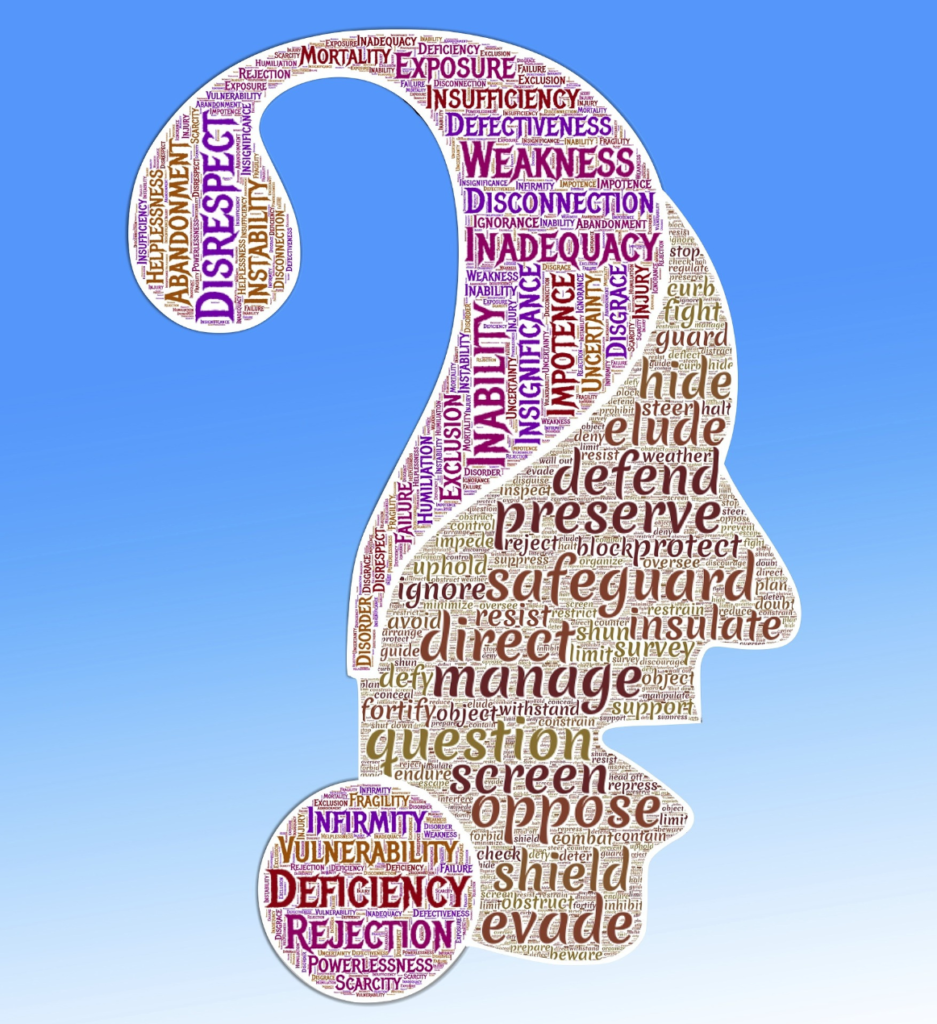
Many self-publishing authors I work with are already experts in other fields. They are doctors, consultants, analysts, academics, or experienced creative professionals. They are used to being competent, with strong self-efficacy in their work. So when self-doubt in writing hits, it can feel sharp. “I lead teams and million-dollar projects. Why can’t I manage one chapter?”
The answer is not that you are weak. It is that you are aware, responsible, and visible.
Your brain is trying to protect you, not sabotage your book
Here is the reframe I come back to again and again.
It is not that your writing is bad. Your brain is trying to protect you.
Publishing a book is visible in a way that your quiet professional expertise often is not. Your clients or colleagues see your polished work. They do not see your messy notes.
A book draft is the opposite. You sit alone with unfiltered ideas. You know that, at some point, other people will read them. Your sidekick thought processes read that as risk, stirring up fear. Reputation, time, money, identity. So it sends up warning flares.
Toxic doubt is one of those flares.
Once you see it this way, you can treat those thoughts as information, not orders. “Thank you, brain, for caring about my safety. Now let us see what the actual sentences say.”
High standards, expertise, and the pressure of self-publishing
Self-publishing adds another layer. You hear a lot of talk about “professional quality,” “market-ready books,” and “industry standards.” None of that is wrong, but it can make every comma feel like a test, intensifying your struggle with self-doubt.
If you write in technical, academic, or professional spaces, the pressure grows again. You know that peers will notice gaps. You know that readers depend on your clarity.
High standards are healthy. The problem comes when you try to meet all of them at the same time, in every sentence, from the very first draft.
This is part of why I like a multi-pass method in my own editorial work. I can care deeply about professional quality and still start by asking simple questions, like, “Is the core argument clear?” or “Can I follow this character’s desire through the chapter?”
One pass cannot do everything. Your brain doesn’t have to, either.
The hidden cost of comparing your draft to finished books
The other common habit is to fall into the comparison trap by holding your messy chapter next to the finished books on your shelf.
You hold your raw draft next to a book that has likely gone through years of revision, multiple editors, fact-checkers, and proofreaders. The contrast is obvious. Your nervous system declares, “See? I was right to panic.”
I often ask writers to imagine that the draft in front of them belongs to a trusted colleague. If a respected peer handed you the same chapter, would you say, “This is garbage, give up”? Or would you say, “There is something strong here. Let’s work it into shape”?
Treat your own pages at least as kindly as you would treat theirs. Be kind to yourself.
Editing is the bridge between messy idea and polished book. When you remember that, you can let your early draft be rough. The work is not to judge the raw material. The work is to shape it.
For another angle, you may find it helpful to read how writers on spaces like Quora think about overcoming deep self-doubt as a writer. Many of them focus on growth and process rather than instant perfection, which aligns closely with an editorial approach.
How Clarity-Focused Editing Helps in Overcoming Self-Doubt
So how do you work with all of this in a practical way?
Clarity-focused editing does not ask you to be free of fear or perfect. It asks you to be aware and specific. You look at the actual words on the page and make decisions that support the reader, one layer at a time.
Here is a structure you can try on your own, and that also mirrors how I work with clients.
Step 1: Create distance so you can see the draft, not just your feelings
When you feel flooded by self-doubt, the first step is distance.
That might mean:
- Taking a short break and coming back tomorrow.
- Printing the pages so they feel less like part of your identity.
- Reading your work out loud to hear it as sound rather than as judgment.
Then, read like an editor, not an author. I like to ask, “If this were not mine, what is actually here?” and “Where do I feel pulled forward as a reader, and where do I feel confused or bored?”
Those questions shift your focus from “Am I any good?” to “What is the reader’s experience right now?” That’s key.
Step 2: Name what is working before you fix what is fuzzy
Self-doubt loves all-or-nothing thinking, draining the courage to continue. If one part of a chapter feels weak, the whole thing must be worthless.
So the second step is to name what is working, on the page, in this draft. Naming these strengths silences the inner critic.
On your draft, circle
- A clear image.
- A sentence that feels honest.
- A strong turn in the argument.
- A paragraph that flows.
You are not “being nice” to yourself. This self-compassion gathers accurate data. These are the parts your brain will forget when it claims everything is broken.
When I send editorial letters, I always name specific strengths before I talk about changes. Not as sugar-coating, but as a map. We want to build on what is already strong.
Step 3: Use simple questions to clarify, not punish, your draft
Once you know what is working and what feels fuzzy, you can start to ask direct questions of the text.
I like questions such as:
- “What am I really trying to say in this paragraph?”
- “What does the reader need to know first to follow this?”
- “If I had to say this in one clear sentence, what would it be?”
These questions help you cut throat-clearing, tame runaway sentences, and sharpen the core idea. They also have a different tone than, “Why is this so bad?” or “What is wrong with me?”
Questions invite curiosity. Curiosity lowers shame and builds self-confidence.
This is the spirit behind the free PDF I mentioned earlier, “Three Powerful Coaching Questions That Help You Move Past a Stuck Writing Project.” Having a short list of reliable questions by your desk can turn a spiraling, self-critical edit session into a focused one.
Step 4: Separate big decisions from fine polish
Finally, give each layer of editing its own turn.
You might start with
- A structure pass. Does the chapter start in the right place? Does each section support the main promise?
- A clarity pass. Are the sentences saying what you actually mean? Have you buried the good parts?
- A style pass. How does the rhythm feel? Are there hedging words you can cut?
- A correctness pass. Spelling, punctuation, citations, formatting.
When I work with authors, I move through passes like these in a similar order. This calms self-doubt, because you are no longer asking yourself to fix everything at once. You can say, “Right now I am only looking at flow,” and let go of commas until it is their turn.
Clarity does not require perfection. It requires attention, one layer at a time.
When to Bring In an Editor So You Are Not Doing This Alone
There comes a point in your writing journey when you are simply tired of being the only one who has read your book. You have done your best to be your own editor, but all you can see now are your own habits.
That is often a good time to bring in an editor, not as a judge, but as a partner.

What supportive, clarity-focused editing actually feels like
Working with a supportive editor should feel steady, not scary.
You should feel:
- Seen in your goals for the book.
- Respected in your subject expertise.
- Guided with clear, specific suggestions.
When I step into a draft, I am not asking, “Is this author any good?” I am asking, “What is this book trying to do, and how can the writing serve that?” I look for patterns the author is too close to notice, then offer concrete fixes, not vague praise or vague criticism.
Good editing gives you a map and a mood shift. You understand what to change, you no longer feel like you are wandering in your own thoughts, and you gain a stronger sense of self-confidence.
How an editorial partner can help you trust your own voice again
A strong editorial relationship is not about replacing your voice with mine. It is about helping you hear your voice clearly, so you can choose it on purpose and rebuild your self-esteem.
In practice, that looks like:
- Noticing where you sound most like yourself.
- Pointing to places where fear has pushed you into generic language.
- Asking questions that help you say what you meant in the first place.
Acting on this kind of feedback encourages you to write anyway. In my own multi-pass, clarity-centered approach, I’m always trying to bring the book closer to what the writer actually wants to say, in the way they most want to say it. As an editorial partner to the writer, I see your voice not as a problem we need to fix, but as a resource we want to trust and refine. Ultimately, this process empowers you to become a published author.
Frequently Asked Questions About Self-Doubt In Writing
Self-doubt rarely appears as “I am doubting myself” on the page. It hides in the writing itself. You see it in long, defensive paragraphs that try to cover every possible objection, in piles of qualifiers like “just,” “maybe,” or “I think,” and in sentences that circle the point instead of saying it. You may repeat the same idea three different ways because you don’t trust the first version. You may bury your strongest claim in the middle of a paragraph so it feels safer. The emotional pattern is doubt, but the visible pattern is clutter, hedging, and a voice that sounds less confident than you actually are.
High-achieving people are trained to scan for risk. That same skill that keeps your work accurate and credible can turn on you when you write. Your brain runs a background check on every sentence and asks, “What if this is wrong, unclear, or embarrassing?” It wants to protect your reputation, your expertise, and your sense of self. So it tries to slow you down with doubt. The problem is not that you lack skill, it is that your brain treats a draft like a public performance instead of a work in progress. Once you see this, you can treat doubt as a safety response, not a verdict on your talent.
Clarity-focused editing gives your brain a calmer job: sort, sharpen, and decide. Instead of wrestling with “Is this any good?” you ask “What am I actually trying to say?” and “Is that clear on the page?” You move from self-judgment to text-judgment. You look for repeated ideas, vague phrases, and sidetracks that belong in a notebook, not the final draft. By shifting the focus to structure, sequence, and word choice, you give doubt a smaller stage. Editing becomes practical: this sentence stays, this one goes, this idea needs a cleaner sentence. Over time, that process builds trust in your own thinking.
If the core idea still feels right but the draft feels messy, you likely need clarity, not a full reset. Signs include: you can explain your point out loud in a few clear sentences, but your written version feels heavy or wordy; readers ask you to repeat yourself, not because the idea is complex, but because the path to it is crowded; you find sections that almost say what you mean, but the wording is fuzzy. In these cases, you don’t need to start from zero. You need to pull the real message forward, cut the padding, and simplify the path from first sentence to last.
Good coaching questions interrupt the spiral of “This is a mess!” and replace it with focused curiosity. Instead of trying to fix the whole draft at once, you pause and ask targeted questions about purpose, audience, and clarity. That small shift calms your nervous system and gives you a handle on the work. In the PDF “Three Powerful Coaching Questions That Help You Move Past a Stuck Writing Project,” you invite yourself to ask better questions at the moment doubt shows up, so you can respond with structure and care instead of harsh self-critique. The value is simple: the right question turns a vague feeling of “I hate this” into a clear next step.
Conclusion: Editing Through Self-Doubt With Calm and Clarity
Self-doubt in writing is common, especially for thoughtful self-publishing authors who care about their readers and their reputation. It often shows up less as a feeling and more as self-sabotaging patterns on the page, from hesitant sentences to throat-clearing, tone shifts, and endless tinkering.
When you remember that your brain is trying to protect you, not sabotage your book, those patterns become easier to work with. You can step into a clarity-focused editing process, one that treats your draft as material to shape for readers rather than evidence against you. You don’t have to fix everything at once. You only have to see what’s actually there and take action on the next clear choice.
If you’d like to go deeper, I’m giving you a fast-read, focused guide to three coaching questions that can help you restart a writing project when you’re feeling stuck, especially if the barrier is internal, not technical. Each page holds one small shift. Keeping a few good questions within reach can help you re-enter a stuck draft with more calm, curiosity, and focus, so your next round of editing feels less like a verdict and more like a quiet, steady step toward the creative freedom of the book you want to share.
Free Resource: Three Coaching Questions To Help You Get Unstuck
Want a little support the next time your writing feels hopeless?
Grab your free copy of the Three Powerful Coaching Questions That Help You Move Past a Stuck Writing Project, a fast read to help you focus, protect your energy, and keep showing up.
It’s a substantive coaching guide with reflection prompts, neuroscience framing, and practical worksheets.
👉 Download it now in the Freebie Library
Are you noticing places where a thoughtful editorial partner would save you time?
I’m here for that. You can start with a simple estimate, and we’ll find the level of editing that serves you best.
🕯️ Start the conversation →
👉 Want to explore editing services? Visit FuturePerfectServices.com

Thanks for reading — here’s to clearer writing and stronger ideas.
~~ Susan