If you’ve started looking for an editor, you’ve probably noticed how confusing editing costs can feel. Some editors charge by the word. Others by the hour. Some quote ranges. Many don’t publish prices at all. And the numbers you do find often don’t seem to line up.
That doesn’t mean editing costs are random. It means they’re situational. You can estimate editing costs reliably, without chasing “average rates” or gambling on the cheapest option, if you understand the handful of variables that actually drive price. Length matters. Editing level matters. Draft condition matters. Complexity, formatting, and turnaround matter more than most people expect.
This guide is a practical, long‑form breakdown of how professional editing is priced, what influences real‑world estimates, and how to budget without unpleasant surprises. If you’re hoping for a single “standard rate,” you won’t find one here. But if you want to plan with clarity, and avoid paying twice for the wrong service, you’re in the right place.
By the end, you’ll know how to:
- estimate a realistic cost range for your project
- choose the right type of edit for your goals and budget
- compare quotes accurately (and spot red flags early)
Key Takeaways
- Editing costs are not random. You can estimate a realistic range by looking at the handful of variables that drive price.
- Length, editing level, and draft condition do most of the work in determining cost. Complexity and special requirements can shift the range.
- Benchmarks can help you sanity-check pricing, but they are not a substitute for a project-specific estimate tied to your draft and goals.
- Quotes are only comparable when scope is comparable. Different deliverables and different levels of editing produce different prices.
- A trustworthy estimate is transparent about what is included, what is not, and what would trigger a scope change or price adjustment.
Estimated reading time: 1 minute
Prefer to Skip Ahead?
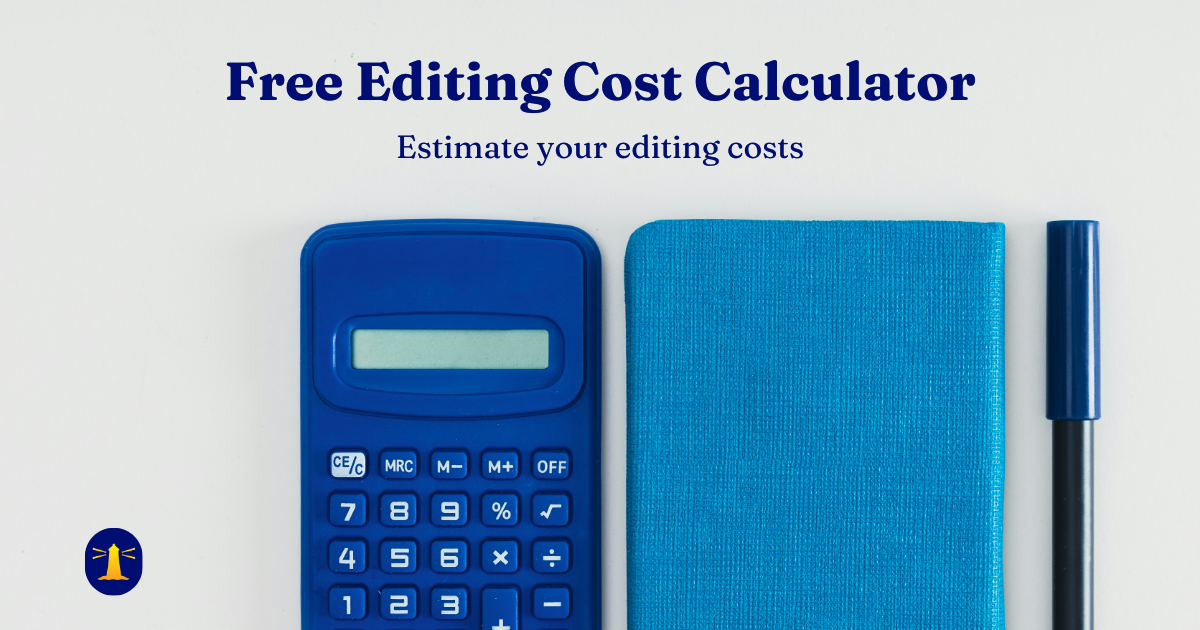
If you already know you want a realistic editing cost range for your project, you can use my Editing Cost Calculator at any time. It’s a gated tool (you’ll need to enter an email so the results can be sent to you), but it’s built for planning, not sales pressure.
Don’t Just Throw Money Around and Hope

What goes wrong if you guess at editing costs?
Joe is a small business owner finishing a 40‑page “quick start” guide he plans to use as a lead magnet and as a paid add‑on for new clients. He’s been sitting on it for months. He’s tired of looking at it. When he skims a few pages, everything seems clear enough. No obvious typos. Nothing jumps out as broken.
So he decides what he needs is proofreading. In Joe’s mind, proofreading means “catch the mistakes.” He hires the cheapest proofreader he can find, reasoning that there’s no point paying more for something that should be quick and simple.
The proofreader does exactly what Joe asked for. The sentences are grammatical. The punctuation is clean. The document looks polished.
Joe publishes the guide and starts sending traffic to it. The problems show up almost immediately, and none of them are typos.
Readers reply with confused questions that should have been answered inside the guide. One says, “I’m not sure who this is for.” Another says, “I thought this was meant for people like me, but half of it feels aimed at someone else.” His virtual assistant tells him the guide makes him sound less confident than he is in real life because the ideas jump around and the main promise keeps shifting.
The most painful feedback comes from someone Joe respects: “This is well written, but I can’t tell what you want me to do next.” That’s when Joe realizes the problem wasn’t the sentences. It was the structure.
Joe wrote the guide the way he thinks: in the order ideas occurred to him, with examples he loves, and with two audiences blended together. The opening never makes a single, clear promise. The sections don’t build. The reader never gets a clean path from problem to decision to action. So even though the grammar is correct, the document isn’t doing its job.
Joe brings the guide to a business editor for a second round. The editor explains that what Joe called “proofreading” was never the real need. The draft needs a clarified promise, a better sequence, and a few missing bridges so the logic holds and the call to action lands. Joe pays again. He loses several weeks reworking the guide. His launch is delayed.
The frustrating part? The first spend wasn’t useless. The proofreading did improve correctness. It just didn’t solve the problem that was actually costing him money.
Joe didn’t waste money on editing. He wasted money on the wrong kind of editing.
If you’re trying to decide what level of editing you need, start with clarity about the problem you’re actually trying to solve, not just what feels affordable in the moment. If you’re unsure how these services differ, this breakdown of copyediting vs. line editing vs. proofreading will help you choose the right level of support.
Don’t Guess: 11 Factors That Affect Editing Costs
1. Know what kind of edit you actually need
There’s a big difference between proofreading and developmental editing. Here’s a quick cheat sheet:
| Editing Type | What It Covers |
|---|---|
| Proofreading | Typos, punctuation, formatting, light consistency |
| Copyediting | Grammar, word choice, clarity, logic, sentence flow |
| Line Editing | Deeper rewriting for tone, rhythm, and readability |
| Developmental Editing | Structure, pacing, argument, characters, content strategy |
If you’d like more detail, look at this blog.
Tip: If your manuscript hasn’t had any outside feedback, start lower on the chart than you think. You may need more than just surface cleanup.
2. Get your scope straight: word count, timeline, format
Most editing estimates depend on three major aspects:
- How long your manuscript is (word count)
- How fast you need it (turnaround time)
- What kind of editing you’re requesting
Knowing those numbers helps your editor give you a tailored estimate. It also keeps costs reasonable with no rushed jobs and no overpaying for services you don’t need.
Here’s what this looks like in real life. A 12,000-word lead magnet that is already clear and well-organized might only need a light copyedit, which keeps the estimate in a predictable range. A 45,000-word business book draft that shifts audiences, repeats itself, or changes its promise partway through usually needs structural cleanup before sentence-level polishing, and that’s a different level of work and a different price.
3. Understand the variables behind the price
A 60,000-word novel written in tight, clean prose will cost much less to edit than a 30,000-word academic paper full of jargon, formatting issues, and citation mismatches.
Complexity matters. Formatting matters. Source-checking and fact verification matter. AI use matters. Your editor should ask the right questions, although it helps if you know the levers to prices, too.
4. Know what industry benchmarks say but don’t cling to them
The Editorial Freelancers Association lists 2025 industry averages like this:
- Developmental Editing: $55–$75/hour
- Copyediting: $35–$45/hour
- Proofreading: $25–$30/hour
Most published editing rates, including those from the Editorial Freelancers Association (EFA), are listed as $ per hour or $ per word. But many professional editors don’t charge that way in practice.
Instead, we estimate your project’s total cost based on the time and effort required. That’s why you’ll often receive a project-based quote, even if hourly or per-word math is used behind the scenes. It’s simpler for both sides and helps avoid surprise invoices later.
Most professional editors use a blended model. We convert those hourly targets into per-word or per-project rates, then adjust based on scope.
5. Don’t anchor on industry rate charts; understand what they leave out
The Editorial Freelancers Association (EFA) provides public-facing rate charts that many clients find helpful, but those numbers come with some big, often-overlooked caveats. Here’s what you should know: Yes, there are industry benchmarks. But they’re not gospel. And they’re not the full story.
The Editorial Freelancers Association (EFA) publicly lists average hourly and per-word rates for different types of editing, compiled from surveys of its global membership. These averages are often quoted by editors and writers alike. But they’re not pricing guarantees, and they often mislead more than they inform.
Let’s unpack what those numbers actually represent and what they don’t.
➤ They show gross rates, not take-home income.
EFA-listed rates don’t include taxes or business overhead. If an editor charges $50/hour, that’s the amount before they subtract 15.3% for self-employment tax, 10–25% for federal/state income tax, health insurance premiums, platform fees (if applicable), and the cost of doing business (software, invoicing tools, training, etc.).
An editor who charges $50/hour may net only $28–$32/hour after business costs, and that’s assuming full billable hours, which few editors can sustain weekly.
➤ The averages flatten a wildly uneven landscape.
EFA rates are built from voluntary self-reporting across a huge spectrum of freelancers, from part-time editors doing occasional side gigs to full-time professionals with deep subject-matter expertise and multiple degrees. So these are averages from freelancers at all levels, not just seasoned professionals.
The EFA collects data from members with a huge range of experience: part-timers, retirees, new freelancers, and a small number of full-time professionals with decades of work behind them. So these numbers do not represent premium pricing from editors with specialized expertise, advanced degrees, or long track records serving high-stakes clients. Instead, they flatten the market into a misleading average.
If you’re hiring someone to polish a dissertation, fact-check a policy report, or finesse a 70,000-word book, you’re paying for judgment, not just grammar, and you’ll often pay above the listed “average” to get that level of support.
A developmental editor with 20 years of experience and a PhD may charge three times what a generalist hobbyist does, and still be underpriced relative to her value. The EFA chart blurs those distinctions.
➤ Specialized services and tough projects cost more. And aren’t broken out.
Rush turnaround? Source verification? Trauma-informed revision coaching? Fact-checking international data? Coaching on publication strategy? None of those appear in EFA’s rate structure. But they’re common reasons why a professional quote might land well above the listed average.
The chart tells you what a group of people report. It doesn’t tell you what your project will cost. Or what it’s worth to get it done well.
➤ Platform pricing and hobbyist rates distort expectations.
It’s worth noting: many editors charge less on Upwork, Reedsy, or Fiverr to stay competitive in those ecosystems. Those rates often reflect commoditized, gig-style editing, not high-engagement, revision-driven editorial work that requires deep context and conversation. And the lowball pricing on sites like Fiverr, Reedsy, and Upwork creates sticker shock for clients who haven’t worked with independent editors.
In contrast, independent editors set sustainable, ethical prices that reflect client partnership, professional development, time-on-task (not just time-on-the-page), and a commitment to quality across drafts. Editors running independent businesses with strong reputations often charge more and offer more in return: consultative feedback, scope transparency, creative insight, and clarity coaching.
Caitlyn Pyle, founder of Proofread Anywhere, publicly documented earning $70,000 in a single year doing only freelance proofreading. Part-time. She worked approximately 20 hours a week, which means her gross hourly rate was about $70/hour.
She didn’t offer coaching, line editing, or consultations, just clean, accurate proofreading, delivered consistently and on time.
If that’s what “just proofreading” earns, imagine what full-scope editing or business-critical services should cost.
I’m going to assume that you’re reading here because doing it right matters to you. And that’s exactly the kind of writer I love working with. That means understanding the real costs of skilled editing, not just the charted averages, but the value behind them.
If you’ve never hired an editor before, think of the EFA numbers as a starting point and not a ceiling. Then ask: What’s the value of a clear, confident final draft to you? And what would it cost to fix it later if you underinvest now?
At this point, most people want to move from theory to something concrete. The Editing Cost Calculator is designed for that moment. It takes the variables you’ve just read about (scope, editing level, timeline) and turns them into a planning range you can actually use. It’s gated, because the estimate and explanation are customized and sent to you. There’s no obligation, just information.
👉 Editing Cost Calculator
6. Sample project estimates (realistic ranges)
I want to be explicit here. These sample estimates reflect U.S.-based 2025-2026 editing rates for full-time professionals, including income tax, scope variation, and project complexity. These are not quotes, but they give you a sense of what’s viable in today’s professional landscape:
| Project | Word Count | Type of Edit | Estimate |
|---|---|---|---|
| Short Story | 5,000 | Line Edit | $275–$450 (Assumes clarity, no rush) |
| Business Report | 8,000 | Proofread (rush) | $550–$750 (Includes rush fee) |
| PhD Dissertation | 25,000 | Copyedit (no reference checks) | $3,200–$3,800 (Complex) |
| Nonfiction Book Proposal | 15,000 | Dev + Line Edit | $1,400-$1,950 |
Complexity, formatting, and turnaround time can shift these numbers up or down. I built these numbers from real work, real scope, and real outcomes. If you understand what’s behind the rate and learn the signals of a professional editor, you can choose based on value, not price alone.
7. Be transparent (and realistic) about your budget
You don’t need to lead with a number. But if you have one, it helps to say so, along with what matters most to you.
This isn’t a negotiation tactic. It’s a planning conversation. For example:
- “I have about $600 set aside and a 60,000‑word manuscript. Is there a way to prioritize the most important fixes?”
- “My budget is $200, and I only need a final proofread. No structural changes.”
- “Quality matters more than speed, but I have a hard deadline.”
Clear constraints help editors recommend the right approach instead of guessing, and they help you avoid quotes that miss the mark entirely.
A good editor will tell you what’s realistic. A great editor will help you decide where your money does the most work.
8. Avoid the trap of “I just need a quick edit”
When people say this, what they often mean is: “I’m worried about the cost.” That concern is understandable.
The problem is that asking for a lighter service than your draft actually needs rarely saves money. It usually shifts the cost to later in the form of rejected proposals, confused readers, missed opportunities, or a second round of editing.
If you’re unsure, try this instead: “Here’s my goal for this document. Based on a short sample, what level of editing would you recommend?” If you’re not sure what that process looks like, you can read about what it’s like to work with an editor before requesting an estimate.
That puts the focus where it belongs: on outcomes, not labels. Before you request an estimate, it helps to sharpen your vision for the document itself.
Editing works best when there’s trust on both sides. If you don’t feel comfortable being honest about your concerns, that’s a signal to pause, not to minimize the scope and hope for the best.
9. What to do if you can’t afford the full edit right now
Editing is an investment. If the setup process feels overwhelming, you’re not alone, and there are ways to simplify it. But sometimes the timing just isn’t right. If your budget is tight, consider
- Asking for a sample edit to prioritize next steps
- Splitting the project into stages (e.g., edit 3 chapters now, the rest later)
- Choosing a lighter service level (e.g., copyedit instead of line edit)
- Booking a coaching or consultation call to refine your writing before editing
Good editors want your project to succeed, even if you can’t afford everything at once. What matters is aligning the service with your current reality, not pretending the draft needs less help than it does.
10. What’s NOT included in most estimates (unless you ask)
A clear estimate should tell you what’s included, but many clients don’t know what to ask. Here are common services that may not be covered unless you request them:
- Rush turnaround (under 3–5 business days)
- Source verification or fact-checking
- Formatting for self-publishing platforms (e.g., KDP, IngramSpark)
- Indexing or creating citations
- Post-edit debrief calls or coaching
If your manuscript has footnotes, images, tables, or references, bring that up early. If you expect formatting to match journal or submission guidelines, say so. Editors will do their best to meet your expectations, but they can’t quote for what they don’t know about.
11. Editor red flags: what to watch out for
Choosing an editor can be intimidating. Here are red flags that signal caution:
- 🚩 No intake process. If they don’t ask questions before quoting, be wary.
- 🚩 Unclear pricing. If they can’t explain how their rates work, that’s a concern.
- 🚩 No contract or terms. Always get expectations in writing: scope, timeline, and payment.
- 🚩 Unrealistic promises. “Guaranteed publishing” or “100% error-free” are red flags.
- 🚩 Too fast to be true. If someone quotes 24-hour turnaround on 80K words, they’re skimming or using AI.
Be especially cautious when the editor offers rock-bottom rates, or vague promises, and doesn’t explain their process.
Some so-called editors charge suspiciously low fees because they aren’t actually editing. They’re running your manuscript through AI or Grammarly and handing it back with a few tweaks. That’s not professional editing. If someone can’t explain what they’ll do (and what they won’t), or if their pricing seems too good to be true, it probably is. Quality editing takes time, skill, and close attention to your goals, not shortcuts.
Look for editors who listen, clarify, and share realistic boundaries. The intake process should be rather lengthy with a contract that is very specific. Allow a few days in your process just to get the contract finalized. The best editors are collaborative, not pushy, and that will be reflected in their business practices.
What smart people get wrong about editing costs
“Editors have standard rates, so I can price this with a benchmark.”
Mini-scenario: Two editors quote wildly different numbers because one is including a style sheet, fact-checking light, and consistency cleanup.
“I just need proofreading.”
Mini-scenario: The draft reads “fine” to the author, but the reader experience is choppy and unclear, so the “proofread” quote explodes when the editor flags it as line-level work.
“I can compare prices without comparing scope.”
Mini-scenario: One quote is for one pass only, the other includes author queries, a clean second pass, and a deliverables package.
What Makes a Future Perfect Services Estimate Different

Most editors quote from a label. You say “proofreading,” they quote proofreading. If the draft actually needed line editing, you find out later, usually after you’ve paid once and have to pay again.
That’s not how I work.
I read your document before I quote. I tell you what I see, what the draft actually needs, and what’s outside the scope of what you’re asking for. If the service you requested won’t solve the problem you have, I’ll say so before we sign anything.
My estimates are transparent about three things: what’s included, what’s not, and what would change the scope. You make decisions based on clear information, not on assumptions about what “standard editing” means.
Use a Cost Estimator That Helps You Plan, Not Panic

Writers, academics, and businesses often hit a roadblock when it comes to budgeting and scheduling editing services. The process is stressful: Who can you trust? What’s a fair price? How long will it actually take? Industry rates and schedules are confusing, and guessing can leave you with sticker shock or missed deadlines.
I built an editing cost calculator because I couldn’t find a current (2025–2026) tool that helped writers estimate editing costs based on scope instead of averages. You can plug in your project’s word count, editing type, and timeline, and get a project-based estimate.
Editing Cost Calculator is your smart, reliable companion. Powered by RightBlogger’s current benchmarks and editing industry averages, this free tool gives you instant on-screen results once you have access. Know what to expect before you begin so you’re prepared, empowered, and ready to move forward.
Example: You’ve just finished a 75,000-word draft of your first novel. You want professional editing, but don’t know what’s realistic for time and cost. Instead of spending hours chasing down quotes, use the Editing Cost Calculator to get fast answers tailored to your project.
How the Editing Cost Calculator Works
- Enter your project details: word count, document type, and draft stage.
- Select the level of editing you’re considering and your preferred turnaround.
- Review your results, including time and budget ranges with plain‑language explanations.
- Use that information to plan your project, communicate with editors, or decide what’s feasible right now.
The goal isn’t to tell you what you must spend. It’s to help you avoid being surprised by what professional editing actually requires.
FAQ: Editing Costs and the Free Editing Cost Calculator
Professional editing costs vary widely based on editing level, draft condition, and project complexity. Public rate charts often rely on older survey data and do not reflect current market realities. In 2025–2026, realistic editing costs reflect professional labor, business overhead, and scope variation, which is why project-based estimates are more accurate than static averages.
Yes. The Editing Cost Calculator here is free to use and built for planning, not pressure. It’s powered by current RightBlogger industry standards rather than a single editor’s personal pricing, and it models real scope variables like word count, editing level, and timeline. It’s rare to find a free editing cost calculator that goes beyond simple per-word math or outdated rate charts.
Many professional editors do not publish fixed rates because editing is situational. Public charts (like industry association surveys) show hourly or per-word averages, but they don’t convert those numbers into a realistic total project cost. A scope-based calculator is often more useful for budgeting than a rate table alone.
No. The calculator provides a planning estimate based on typical professional standards. A formal quote requires document review and defined scope. The goal of the calculator is to help you budget intelligently before entering a contract conversation.
Yes. The tool is designed to help you think through feasibility, whether you’re budgeting for next quarter, comparing service levels, or deciding whether to stage your project. There’s no obligation attached to using it.
Budget With Clarity, Not Guesswork
Estimating editing costs doesn’t have to feel like a gamble. When you understand what actually drives price (scope, complexity, draft condition, and responsibility), the numbers stop feeling arbitrary. You may still need to make tradeoffs. You may still decide to spend less, or to wait. But you’ll be making those decisions with your eyes open.
That’s the real goal: informed planning, not perfect prediction. Editing isn’t just about correcting errors. It’s about helping a document do its job, whether that’s persuading a reader, supporting a decision, or representing your work with clarity and confidence. The right estimate supports that outcome instead of distracting from it.
If you’re ready to get a number you can actually plan around, the Editing Cost Calculator is a good place to start. It’s fast, free, and designed to give you context before you enter a contract conversation.
Because good editing isn’t transactional. It’s collaborative. And collaboration starts with transparency.
Ready to Get a Real Number?
The Editing Cost Calculator gives you a planning range based on your actual project scope. It’s free, it’s gated (you’ll get the results by email), and it’s built for writers who want to plan, not guess.
👉 Get the Editing Cost Calculator

Thanks for reading — here’s to clearer writing and stronger ideas.
~~ Susan