You know when writing just … works. You don’t reread. You don’t stall out. You trust it.
That feeling isn’t luck, and it isn’t only talent. Most of the time, it comes from a quiet skill that sits behind the sentences. It’s the ability to choose what matters, in what order, and with what weight.
I see writers chase better words, stronger hooks, cleaner grammar, and the perfect “style.” Those things help, but they’re not the main upgrade. The real lift comes from the decisions behind the words, the choices that keep the reader oriented and calm.
Clarity isn’t just grammar. It’s judgment. It’s the skill of making decisions that help the reader stay focused, trust your message, and take it in.
Key Takeaways
- Clear writing depends on editorial judgment, not just grammar or style rules.
- Judgment means making choices that keep the reader focused, oriented, and confident.
- AI can smooth sentences while weakening meaning, tone, and honesty, so human judgment matters more.
- Strong writing comes from purpose, order, and deliberate wording that fits the reader and the goal.
- Clarity is a reader experience, it’s how you help people understand and trust the message.
The Overlooked Skill Is Editorial Judgment
The Habit of Choosing What Matters
When I say editorial judgment, I mean the habit of deciding what to keep, cut, move, or say differently so the reader “gets it” immediately. It’s not about sounding fancy. It’s about being useful.
Good judgment is what turns “nice writing” into writing people can follow. It’s what keeps a report from feeling like a maze, keeps an academic paper from hiding its claim, and keeps a story scene from wandering off the page.
Grammar supports clarity, but it doesn’t create it. A sentence can be correct and still leave the reader asking, “Wait, what was the point?” Real clarity often hinges on deciding what readers should notice first, and what they can safely ignore.
If you want a solid, practical reference for the nuts and bolts of clarity and concision, the University of Nevada, Reno’s writing center has a helpful guide: https://www.unr.edu/writing-speaking-center/writing-speaking-resources/guidelines-for-clarity-and-concision
What editorial judgment looks like on the page
On the page, judgment shows up as reader-facing choices. It looks like:
- Cutting throat-clearing intros that warm up your fingers but waste the reader’s time
- Keeping one main point per paragraph (with support that actually supports it)
- Choosing specific nouns and verbs, so the reader can picture the action
- Adding just enough context, right before the reader needs it
- Removing side trips that are interesting but off-topic
A quick way to spot it is to imagine a before-and-after moment.
- Before: an opening that explains your topic’s history, then circles back to your point three paragraphs later.
- After: one clear sentence that states the claim, then the background moves later (or disappears).
That “after” version often uses fewer words, but it feels bigger, because the reader isn’t doing extra work. For more practical signs your writing may be unclear, check out these clarity checkpoints.
Why grammar and style tips are not enough
Most writing advice is surface advice: fix this word, avoid that phrase, vary your sentence lengths, use fewer adverbs. Fine. I use those tools too. And I’ve written more about surface-level fixes here, but they’re not the whole story.
But surface fixes can’t replace structural choices.
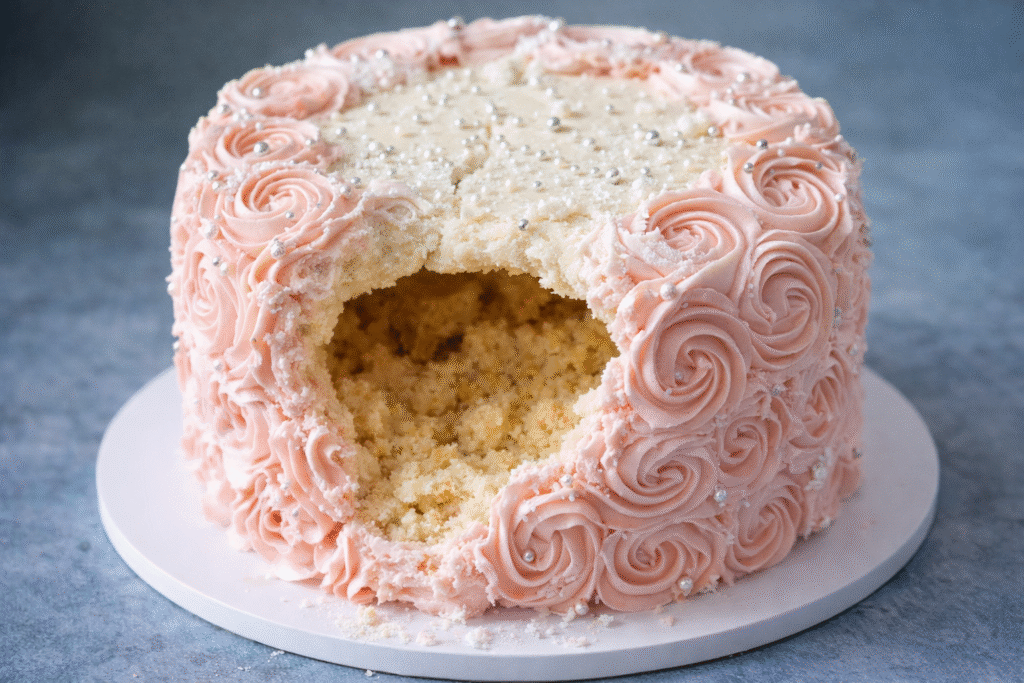
A piece can be grammatically clean and still confusing because the writer never decided:
- What matters most right now
- What the reader needs to understand first
- What evidence belongs near which claim
- What can wait, and what can go
Templates can make writing smoother, but smooth isn’t the same as clear. Clarity in writing comes from focus, order, and emphasis, not just correctness.
Clarity In Writing Comes From Three Decisions
Purpose, Order, & Emphasis
When I revise, I don’t start by hunting typos. I start with three decisions that act like a checklist. If I get these right, the rest is much easier.
It’s like building a path through a field: the signposts can wait, but there has to be a path that goes somewhere.
Purpose: What I want the reader to know, feel, or do
Before I revise, I write one sentence that states my purpose. One sentence, not a paragraph.
I use prompts like:
- Who is this for?
- What do they need from me today?
- What question am I answering?
- What do I want them to do after reading?
This sounds simple, but it’s where clarity is born. Purpose gives me permission to cut good lines that don’t serve the reader. It also tells me what kind of tone to use. A grant proposal and a personal essay can both be clear, but they need different kinds of clarity.
Purpose also protects me from “helpful” tangents. If a paragraph doesn’t serve the purpose, it has to move or go.
Order: The path I am building for the reader
Order is where many solid drafts quietly fail. The ideas are fine, but they arrive in the wrong sequence.
Common ordering patterns that work across genres:
- Problem, then solution: Great for business, policy, and how-to writing.
- Question, then answer: Strong for essays, FAQs, and email.
- Claim, then proof: Essential for academic arguments.
- Story, then point: Great for narrative nonfiction and many talks.
My simplest rule is this: put the confusing part earlier, and define terms before using them. If the reader has to hold an unknown term in their head for three paragraphs, they’ll guess, and their guess will be wrong.
If background slows the reader down, I move it. If it doesn’t earn its space, I cut it.
For a clean explanation of how emphasis and sentence structure guide readers, Duke’s graduate scientific writing resource is excellent: https://twp.duke.edu/sites/twp.duke.edu/files/file-attachments/cohesion-coherence.original.pdf
Emphasis: What I choose to highlight, repeat, or simplify
Emphasis is how I tell the reader, “This is the part to keep.” It’s also how I stop competing ideas from fighting in the same paragraph.
A few emphasis tools I rely on:
- Topic sentences: I make the first sentence do real work.
- Short paragraphs for key points: Space can signal importance.
- Careful repetition: I repeat the main term instead of swapping in weak synonyms.
- Trimming extra examples: One strong example beats three quick ones.
- Limiting jargon: I use technical terms when needed, then I define them.
Emphasis includes what I don’t emphasize. If everything is “key,” nothing is. When I feel tempted to bold, italicize, and underline, it usually means the structure needs help, not the formatting.
How to build better editorial judgment, even if AI was used
I’m not anti-AI. I’m anti-blurry meaning.
AI can help me draft faster, test alternate phrasings, or spot patterns I’m too close to see. But editorial judgment is what keeps the voice honest and the message intact. That matters whether I’m writing a government memo, web page copy, a white paper, or a research abstract.
A quick revision pass I can run in 10 minutes
When time is tight, I run a short, repeatable pass. This isn’t a formula, just a check-in I’ve refined over decades. It works because I know what to trust, what to cut, and what matters most. But even a simplified version can help spot weak spots in a pinch. It’s basic on purpose:
- Read the first paragraph, then write the one-sentence point in plain words
- Label each paragraph with its job (define, argue, prove, explain, instruct)
- Cut or move anything that doesn’t have a job
- Make verbs concrete (replace “is” and “has” where it’s weak)
- Replace one vague claim with one real example
- Tighten the ending so it matches the start
Then I read it aloud. I don’t perform it, I just listen. My voice catches the spots my eyes forgive.
If you want another set of practical clarity reminders from a different angle, this article is a solid read: https://councils.forbes.com/blog/how-to-write-more-clearly-in-8-steps
How AI raises the need for judgment
AI often makes text smoother. That’s the risk. Smooth text can blur meaning, soften claims, and flatten a voice until it sounds like everyone else.
AI might swap “hard truth” for “challenging insight,” that is, smoother, but softer. The result feels less human, less honest.
That matters in creative work, where tone is the point. It also matters in academic and business writing, where claims carry stakes. If the language gets vague, accountability gets vague too.
My rule is simple: I use AI for options, then I choose based on audience, stakes, and intent. I protect:
- Specificity (what happened, who did what, what changed)
- Accountability (what I can support, what I can’t)
- Voice (the level of heat, care, and directness that fits the piece)
For writers working in research and publishing spaces, it also helps to know how formal policies are evolving. This open access review on editorial policies around AI use offers some useful context: https://pmc.ncbi.nlm.nih.gov/articles/PMC12170296/
Frequently Asked Questions About Editorial Judgment in Writing
Editorial judgment is the skill of choosing what to say, what to cut, and how to order ideas so the reader stays with you. It covers tone, emphasis, pacing, and what level of detail the reader needs. It’s less about rules, more about decisions.
Grammar can make sentences correct while the message still feels foggy or hard to follow. Clarity comes from structure, intent, and good calls about what the reader needs next. A clean sentence that says the wrong thing is still a problem.
AI tends to smooth and normalize language. That can reduce friction, but it can also flatten voice and soften meaning. AI might swap “hard truth” for “challenging insight”, which is smoother but softer. The result feels less human, less honest.
Clarity means the reader doesn’t have to work to follow the point. The logic holds, the tone fits, and the focus stays steady from start to finish. It’s also consistency, your message sounds like one mind, not a patchwork.
One habit I lean on: reading a paragraph and naming its job (set-up, proof, example, takeaway) in just a few words. If I can’t name it, the structure needs work. This habit forces purpose and makes structure easier to see and fix.
The Real Power Move
Good writing becomes great when we make better choices for your reader. That’s the whole move. We don’t need to decorate every sentence; we need to decide what the reader should understand, in what order, and with what emphasis.
Clarity in writing is a gift to readers, and editorial judgment is how I deliver it. Perfection is nice; judgment is critical. You need purpose, order, and choices that help the reader stay with you. If you’re stuck on what your purpose even is, these coaching questions can help surface it fast. See what your draft becomes when every paragraph earns its space.
The Real Upgrade Isn’t Style. It’s Judgment.
That’s what I bring when your writing needs to hold up under pressure — not just looking good, but standing strong.
If clarity matters in your next piece, get an estimate.
I’ll walk you through what’s working, what’s missing, and whether we’re a fit.
Ongoing editing or monthly retainer support is also available if you prefer steady partnership across multiple projects.

Thanks for reading — here’s to clearer writing and stronger ideas.
~~ Susan