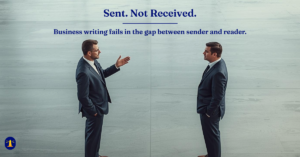

Clear writing wins trust. It opens doors. It saves hours of back-and-forth and helps your best ideas land on the first read. If you write for busy reviewers, clients, or journal editors, you know how valuable clarity is.
Here is a simple routine you can run in about ten minutes. It improves flow, tone, and credibility without a full rewrite. Do this quick pass after you have a draft, and before you start deep line editing. The pass focuses on purpose, structure, simple words, sentence length, and scannability.1 Expect fewer confused emails, faster peer review, smoother approvals, and stronger impact. Grab a timer, my freebie checklist, your document’s search box, your plain-language list, and text-to-speech. This is your friendly clarity check editing pass.
Why Clarity Editing Beats Clever: What a Ten-Minute Pass Can Do
Clever lines can charm, but clarity helps people act, cite, approve, or buy. In ten minutes, you will not polish every comma. You will lift meaning and flow so readers get the point faster.
For a helpful overview on editing choices that make prose leaner and more readable, see these practical ideas on editing techniques for leaner, more powerful writing. If you prefer a quick set of big-picture editing aims, the University of Pennsylvania’s guidance to seek clarity, accuracy, and efficiency pairs well with this pass.
What A Clarity Check Editing Pass Is, and What It Is Not
This pass fixes muddled purpose, vague openings, long sentences, jargon, weak structure, and hard-to-skim pages. It flags bigger issues for later.
A Clarity Check Edit Pass is not a full copyedit or a redesign of tables and figures. It will not re-argue your entire paper or rebuild the literature review. Fast rule: if a fix will take longer than one minute, leave a comment and move on. Calm and steady wins.
Set a Straightforward Goal for This Draft
Before the timer starts, define audience, purpose, and the single most important takeaway in one sentence. Try these prompts:
- Who must understand this on one read?
- What do you want them to do next?
- What is the single most important claim?
For an academic paper, think about the core claim and the value for your field. For a client memo, think about the decision they need to make. As a clarity reminder, write that one-line purpose at the very top of your draft (for temporary use). Example: This brief explains the three options for the rollout and recommends Option B for cost and speed. That one line keeps you honest. Every choice you make in the next ten minutes should serve that goal.
 Photo by Suzy Hazelwood
Your Minute-by-Minute Clarity Check Edit Plan
Use these five micro-steps. Keep your changes small and focused. Save a clean version when you finish.
Minute 1: Intent and Audience
Re-read your one-line purpose. Scan your first paragraph. Does it point to the goal? Does the tone fit peers, reviewers, or clients?
If not, add one guiding sentence that states the problem and the promise. Keep it short. Example: This memo outlines two risks in the Q4 plan and offers a simple fix. Stop after one or two sentences. No rabbit holes.
Minutes 2–3: Title and Opening That Sets Expectation
Your title earns attention when it names the topic and the value. Replace vague titles with outcome words. Example: change Notes on Methods to Methods That Cut Review Time by 30 Percent.
In the first three or four lines, answer who, what, why it matters, and what comes next. Cut throat clearing like In this paper we will attempt to. Replace with a crisp promise: This study tests three models and recommends the most reliable approach for small datasets.
For a quick, research-backed reminder to use read-aloud and simple checklists, this guide on editing and proofreading techniques from the University of Nevada, Reno is a keeper.
Short paragraph opening example (Before / After):
In today’s rapidly changing world, businesses must adapt quickly in order to remain competitive, and one of the most important factors in doing so is clear communication, which not only helps internally but also externally with clients and partners across various sectors.
In today’s rapidly changing world, businesses must adapt quickly in order to remain competitive., and one of the most important factors in doing so is Yet clear communication continues to be crucial to catch the attention of busy which not only helps internally but also externally with clients and increasingly important partners. across various sectors.
Clean version: Today businesses must adapt to remain competitive. Yet clear communication continues to be crucial to catch the attention of busy clients and increasingly important partners.
Sentence example:
Sometimes all an editor can do is point out where meaning is not clear. We won’t guess at your meaning, and writers’ thoughts are sometimes just foggy.
There’s a lot of discussion around the <specify the issue> issue <has focused on ???>, leading to improvements in <what? briefly!>. and while steps have been taken, tThe process still has many areas that need to be looked at needs x, y, z to improve.make progress.
Minutes 4–6: Shorter Sentences and Simpler Words
Scan for long sentences. Split any sentence over 25 words into two sentences. Aim for an average sentence length under 20 words, with a mix of short and medium lines. Readers stay with you when they do not have to re-read a sentence twice.
Swap complex words for plain ones. Quick wins:
- utilize to use
- prior to to before
- conduct to do
- regarding to about
- commence to start
Cut filler that bloats a line without adding meaning: very, really, basically, actually, in order to. Even the military won’t write in order to. They use an abbreviation! Replace passive with active when it helps clarity. The survey was conducted becomes We surveyed 312 teachers. Keep key terms that your field needs. Keep it fast. Do not chase perfect.
Be brutal and cut. I do this well to my own writing after about 10:30 pm when I get tired and a bit impatient, or under immense deadline pressure.
Minutes 7–8: Structure, Signposts, and Flow
Check your headings and topic sentences. Each section should start with a clear claim or question. If one paragraph hides the main point in the middle, move it up.
Reorder one or two items if a quick swap improves logic. For example, give a definition before an example. Add signposts like first, next, and finally to guide the reader. If you see a long block of steps, turn it into a short list.
Minutes 9–10: Scan, Facts, and a Quick Read Aloud
Do a skim test. Can you get the main idea from the headings and first lines? Fix one confusing spot.
Check names, spellings, numbers, and units. Then do a quick read aloud of the last paragraph or use text-to-speech. Your ear catches repeats and missing words. Keep it to one pass. Save deeper fixes for later.
For a friendly, short checklist to support this routine, this article on self-editing like a pro adds a few simple tricks you can paste into your own process.
Fast Tools and Templates to Speed Up Clarity
Small aids help you move fast and think clearly. Use tools as helpers, not as the boss of your voice.
- Readability goal: set a quick target tied to your audience.
- Personal cuts list: your top five words to watch.
- Plain-language swap sheet: your preferred replacements.
- Copy-and-paste AI prompts: fast helpers that keep your voice intact.
Store your checklist in a note so your clarity check editing pass becomes a habit you can run on any draft.
Readability Targets You Can Use Today
For general audiences, aim for grade eight to ten. For academic journals, higher is fine when terms are defined.
Keep these at-a-glance targets:
| Metric | Target |
|---|---|
| Average sentence length | Under 20 words |
| Paragraph length | Most at 3 to 6 lines |
| Heading frequency | Every 300 to 500 words |
| Plain words in key sentences | Prefer simple, field-accurate language |
Many word processors show reading stats. If yours does not, free tools can give a quick read on sentence length and grade level. Make adjustments in minutes, not hours.
Search Patterns That Surface Clutter
Use the search box to find and fix clutter fast. Try these patterns:
- very, really, basically, actually
- in order to, due to the fact that
- there is, there are
- it is important to note
- of the, that (when used as filler)
- passive helpers like was, were, been
Replace or cut when meaning stays the same. Some passive voice is fine in methods or results. Use your judgment.
Plain-Language Swaps Cheat Sheet
Start with these, then add your own based on your field.
| Complex Word | Plain Alternative |
|---|---|
| utilize | use |
| facilitate | help |
| demonstrate | show |
| indicate | show |
| numerous | many |
| prior to | before |
| assist | help |
| regarding | about |
| methodology | methods |
| commence | start |
AI Prompts That Keep You in Control
Paste these into your favorite AI tool, then verify facts and keep your tone.
- Rewrite this paragraph at an eighth grade reading level without changing meaning. Keep key terms.
- Suggest three headline options that state the topic and the benefit in simple words.
- Highlight jargon and offer plain alternatives that fit a professional audience.
Keep your voice. Let the tool nudge speed and focus.
Common Clarity Blockers and Quick Fixes
These problems show up in almost every draft. Pick one to focus on this week, then rotate.
Jargon and Acronyms
Define once in plain words, then use the short term. If an acronym appears fewer than three times, write it out. Replace insider terms when a simple word works.
Passive Voice and Weak Verbs
Use active voice when it clarifies who did what. Replace forms of be with stronger verbs when the meaning stays the same. Example: There are three factors that influence becomes Three factors influence.
Hedging and Filler
Cut softeners like quite, somewhat, seems to, appears to, may possibly, and in my opinion when they do not serve precision. Keep precise qualifiers that protect claims. Aim for firm, honest statements.
Buried Lead and Long Paragraphs
Move the key point up. Start sections with the takeaway, then show support. Break long paragraphs into one idea per paragraph. Use short lists for steps or criteria.
🐾 A Quick Reset With Finnegan, the Silver Tabby Kitten

Meet Finnegan, a small silver tabby with big golden eyes. He is your reminder to pause and blink. Take a 30-second eye break: look away, blink a few times, focus on something across the room, then read one paragraph out loud. That tiny reset helps you spot typos and unclear lines, because your brain stops auto-filling. Make it a gentle, zero-stress editing habit you can keep.
The 30-Second Eye Break Method
- Return for the final read aloud.
- Stand up if you can.
- Look at something 20 feet away for 20 seconds.
- Roll your shoulders and take one deep breath.
- Sip water.
Think of Finnegan as your pause cue. (paws ….)
Use a Cute Cue to Spot Mistakes
Tape a small cat sticker or a kitten photo near your screen. When you see it, do one quick scan for a single thing, like extra words or missing verbs. Small cues build big habits that improve every draft you touch.
FAQ
A short editing pass that improves sense, flow, and ease of reading. It trims clutter, sharpens key points, and fixes confusing spots. You do it after a draft, before deeper edits.
Focus on five things:
1 – Purpose: can a reader name your main point in one line?
2 – Structure: clear start, middle, and end.
3 – Sentences: short, direct, no filler.
4 – Word choice: plain words, no jargon unless needed.
5 – Formatting: helpful headings and white space.
State it in the first 2 to 3 sentences. Use a clear subject and verb. Put the payoff early. Repeat the core idea in the close.
Yes. Your ear catches drag, long chains, and odd phrasing. If you run out of breath, split the sentence. If you stumble, rewrite.
It clarifies claims and methods, improves signposting, and keeps tone formal yet human. Add short cues, in this study, we found, or the data show. Keep citations but cut fluff around them.
No. Use active voice when you can since it is clearer. Keep passive for unknown actors or accepted forms, e.g., samples were stored at 4°C.
Run 10 minutes per section. Start with the abstract or executive summary. Then do the intro and conclusion. Tackle high-traffic sections next.
Conclusion
A short clarity check editing pass lifts any draft without stress. You set intent, sharpen the title and opening, trim sentences, add signposts, and finish with a quick scan and read aloud. This routine protects your voice and improves trust in your work.
Customize your own one-page checklist. Set a timer. Run this pass on your next email, abstract, or proposal, and note one result, like fewer follow-up questions or faster approval. If the payoff feels good, bookmark this guide and share the checklist with a colleague who loves clear, confident writing. Your future self will thank you for choosing clarity.
- Note: “Scannability” is a word, although it is not in Merriam Webster. The word is newer and more niche than “scannable,” but widely used in User Experience (UX), design, and content strategy. While scannable is a long-established adjective meaning “able to be scanned,” scannability is its noun form, referring to the degree or ease with which something can be scanned. ↩︎
Want to sharpen your writing fast—without overthinking every sentence?
Download the Ten-Minute Clarity Checklist, a one-page guide to improve purpose, structure, and flow in just ten minutes.
Perfect for blog posts, op-eds, website copy, or any public-facing draft.
No red pen required. Just clear writing, fast.
👉 Get the checklist in the Always-Free Library.
Need a second set of eyes to catch what you’ve missed?
I help authors and professionals tighten structure, reduce confusion, and clarify voice, without heavy rewriting.
If you want feedback that protects your intent and respects your time, we can map the edit together.
👉 Plan the edit together → https://futureperfectservices.com/expert-editing-services

Thanks for reading—here’s to clearer writing and stronger ideas.
~~ Susan